March 26, 2019

The Lukeion Project Instructor Favorites 2019

Most Beautiful, Weirdest, and Most Informative

[Note: this was originally intended to be part of a series of weekly notes sent to all current Lukeion students but we decided this was certainly blog-worthy!]

By now you know that your Lukeion Project Instructors love many things about the ancient and not-so-ancient world, but do you really know their favorites?  This week I asked our instructors to tell me their favorites in three categories: 
  • Most Beautiful
  • Weirdest
  • Most Informative. 
Choices were hard, the competition was fierce, but the results are in, and if you look carefully you can see which time period we tend to gravitate toward!

MOST BEAUTIFUL:

Mrs. Barr: The Blue Cameo Vase from Pompeii. Why? Because that specific color of blue is my favorite but (to sound more scholarly) also this: How the Roman artists made this vase is still largely a mystery. I love when ancient skills are better than what the modern mind can conceive!

Mr. Barr: After anguishing over my answer, I've decided to go with the Temple of Athena Pronaia at Delphi because of its beauty within the context of its environment.
(Although the Nike of Samothrace was a very close second!


 Mrs. Baty: The play “A Midsummer Night’s Dream” because it’s just so much fun!


Dr. Fisher:  The bee pendant from Malia, Crete.  Why: it's gold and who doesn't like shiny things? Plus, the technique including granulation on such a small scale is very impressive, especially for c. 1800 B.C.!


(Although I’m also REALLY partial to the Apollo Kylix from Delphi, Greece c. 480-470 B.C.)


Dr. Haggard:  Marcus Aurelius. What is most beautiful is that he was a man of privilege as one born into nobility and nurtured by emperors, yet he learned from a Stoic slave to be humble and more concerned for others than himself.


The WEIRDEST:

Mrs. Barr: Mine isn't a specific artifact, but a study was done on human remains from Herculaneum and nearby villas. Residue inside the cranial cavities reveals that the poor victims of the pyroclastic flow from Vesuvius were not only instantly vaporized but their bones (which were not vaporized) actually floated midair for a fraction of a second.

Mr. Barr: I'm going to go with the mosaic of the skeleton carrying jugs from the House of the Faun in Pompeii. Even if the skeleton were able to get water or wine or whatever if it tried to drink, where would the liquid go? (The Memento Mori mosaic with the monkey skull was a close second.

Mrs. Baty: Shakespeare’s “second best” bed, which he left to his wife in his will.

Dr. Fisher: The bronze liver of Piacenza.  Seriously? Who builds models for reading sheep entrails?  The Etruscans did, that’s who!  And if sheep entrail reading wasn’t enough, it is inscribed in the Etruscan language which is largely untranslatable.

For some more info go here.

Dr. Haggard: Diogenes. When Alexander the Great offered him anything at all, Diogenes asked him to move out of the way since he was blocking the light. In a rich man’s home, Diogenes was asked to not spit on the floor so Diogenes spit in the man’s face claiming, “it was the only worthless thing in the room on which to spit.”
(And then there was that whole hanging-out-in-a-tub thing) 


MOST INFORMATIVE:

Mrs. Barr: This was a very difficult category to answer so I'll have to say the remains of the scrolls at the Villa of the Papyri in Herculaneum. This villa (which was packed full of perfectly preserved bronzes) is a dream come true! It is a preserved ancient library! Although it was first discovered in 1752, modern research is finally starting to pay off so we can read the hundreds of burned scrolls. There are high hopes that archaeologists will find hundreds more in the years to come. 

Mr. Barr: The archaeological site of Akrotiri on Santorini because it is a time capsule of the Minoans.
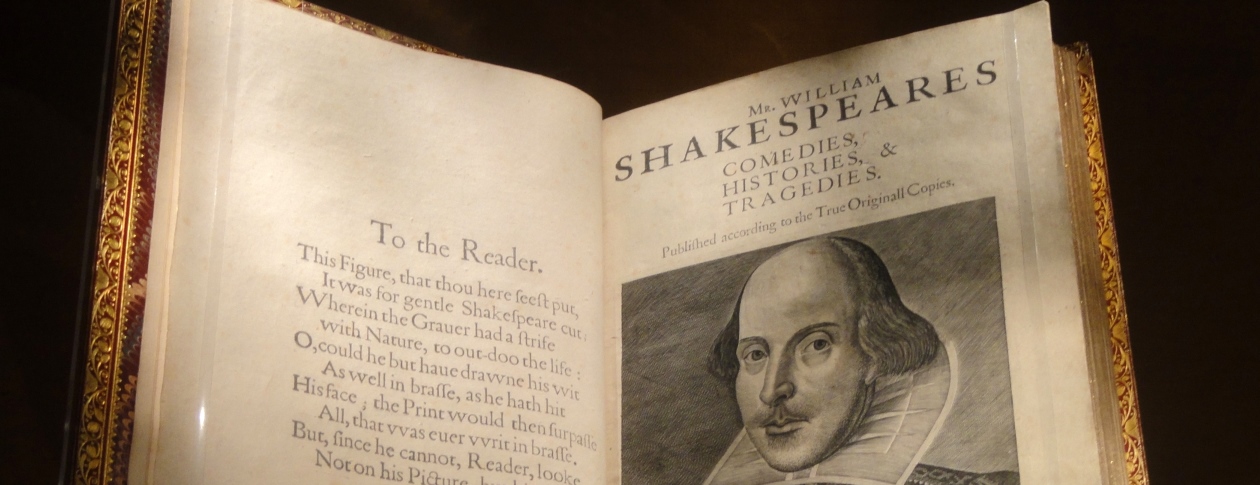
Mrs. Baty: The First Folio.  Many of the plays that we love from Shakespeare wouldn't still be in existence if his friends hadn't decided to gather everything up after his death and get it published.


Dr. Fisher: I’m a big fan of the crossover of archaeology and literature, especially in the Archaic period when the Greeks first began writing their poetry down. Therefore, the Mykonos Vase c. 670 B.C. with its earliest depiction of the Trojan War gets my vote for most informative, as it helps us date the canonization of Homer’s epics.


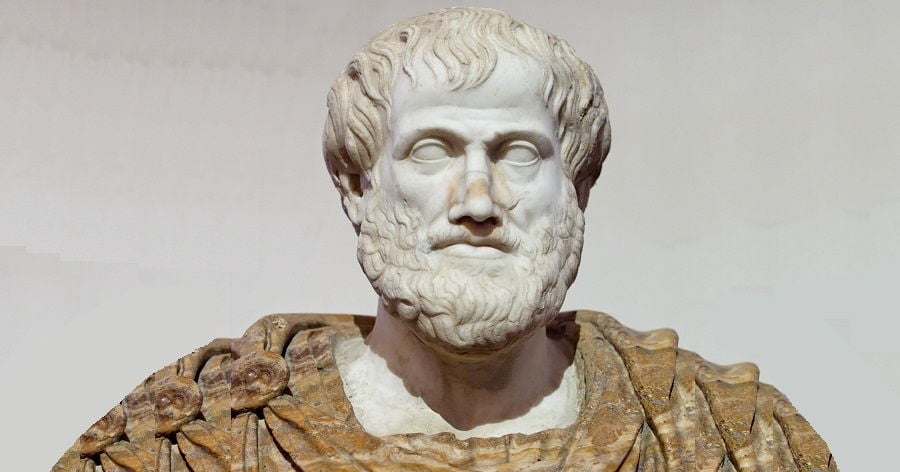
Dr. Haggard: Aristotle. As wiki says, “his philosophy has exerted a unique influence on almost every form of knowledge in the West and it continues to be central to the contemporary philosophical discussion.” And I am in full agreement. He formalized logic and reason. Had the east had a student of Eastern Philosophy such as he, Confucianism and Taoism might not be the fortune cookie mysticism people take them for today.

March 18, 2019

The Value of Classical Subjects in a Modern Education


By Amy E. Barr at The Lukeion Project

I spend a lot of time at homeschool conferences talking about the benefits of Latin and Greek during the high school years. People with limited time, money, and energy always want to know why they should bother with “dead” languages when live ones seem more exciting or at least more…modern. All things being equal, Spanish, French or Russian may seem more interesting and the restaurant field trips can be super tasty.

A few decades ago a good education, as had been the case for over 2000 years in a few big parts of the world, depended on a firm foundation in Greek and Latin. At the turn of the last century, for example, even an average high school graduate could handle a goodly paragraph of Cicero, Vergil or Caesar. Today, very few of even the most ambitious high school students will study these languages, and even fewer of them will study for more than two years. Have Latin and Greek fallen out of style? Are they finally dead?

When a student first tackles these languages for real (say, age 14 and older), she will not spend much time learning how to order food in Latin or driving directions in Classical Greek. Since these languages are primarily read, students jump in at a higher level and advance quickly. In only chapter 3 of Wheelock, for example, students learn Seneca’s wise observation that nulla copia pecunia avarum virum satia, “No amount of money satisfies a greedy man.” They then follow up with modum tenere debemus, “We ought to maintain moderation.”1 

Meanwhile, most beginner Spanish students are still working through the correct pronunciation of “Hello, my name is ____, what is yours?”

Because of inflection (changing the form of a word to reflect its purpose in the sentence) and because there’s little focus on a proper Roman or Athenian accent, a Classical language student must read everything syllable by syllable. Word order is very different in Latin and Greek so the student must become aware of sentence mechanics while she works out ambiguous case endings and tense markers.

The results? A student’s analytical skills will increase a thousand-fold as he practices his powers of deduction to decode the ever-changing language puzzles at hand. Progressing more quickly than he would in any spoken language, he rapidly learns to apply language mechanics and analysis to everything from math to music, English to exegesis, and Calculus to composition. Learning Latin and Greek will make a student analytical and logical by necessity. He becomes a person who “reasons.”

Look at how Cicero explains why we humans are different from animals to see the value of being a person who reasons: “But man—because he is endowed with reason, he understands the chain of consequences, observes the causes of things comprehends the relation of cause to effect and of effect to cause, draws analogies, and, connecting and associating the present and the future, he easily surveys the course of his whole life and makes the necessary preparations for its conduct (de officiis 1.11).”

Becoming logical, analytical and well-reasoned is just one beneficial side effect of Classical studies. Can you imagine the ripple effect of improving the quantity of thoughtful reasoning human beings in the modern world?!  Meanwhile, Classical subjects impact the quality of writing and composition skills, vocabulary, speech, and comprehension.  Estimates of how many words have entered English from Latin and Greek start with a conservative 60%. Those who are legal, medical or scientific professionals might say it is closer to 80%. The study of Classical language used to be the primary lens through which we could better understand the mechanics and vocabulary of English. Therefore, previous generations were so much better at our own language while we moderns flop around with a greatly diminished literacy rate.

We can't overestimate the value of a Classics major. Check this out: according to Association of American Medical Colleges, students who major or double-major in Classics have a better success rate getting into medical school than do students who concentrate solely in biology, microbiology, and other branches of science. Crazy, huh? Furthermore, according to Harvard Magazine, Classics majors (and math majors) have the highest success rates of any majors in law school. Believe it or not: political science, economics, and pre-law majors lag fairly far behind. Even furthermore, Classics majors consistently have some of the highest scores on GREs of all undergraduates.

Teaching Latin and Greek is now on the decline in all public schools and almost all private schools. I believe this fact is symptomatic of something bigger than budget cuts. Consider the results:  reasoning, analytical, logical, independent learners and thinkers. These qualities are old-fashioned (nay, even dangerous) by today’s standards. Let me urge you to be old-fashioned. Master some Latin and Greek.
-------------------
Latin students compared to all other students on the verbal portion of the SAT:
2003
2004
2005
2006
2007
2008
2009
2010
Latin
672
674
681
672
678
677
676
678
All Students
507
508
508
503
502
502
502
501
French
638
642
643
637
637
632
631
633
German
626
627
637
632
632
627
630
626
Spanish
575
575
573
577
574
565
557
561
Hebrew
628
630
620
623
622
611
619
612

1 Wheelock, Frederick M., and Richard A. La Fleur. Wheelock's Latin. New York: Harper Collins, 2011. 29. Print.


March 15, 2019

Why Read Literature in the Original Language?

By Amanda Reeves (Former student at The Lukeion Project and current grader, a graduate of Stanford University, avid world traveler, polyglot, good egg)

Every few years, a new translation of an ancient text gets published and puts the classics world in something of a tizzy to analyze and comment on the latest attempt to capture the nuance of the original language. Some, such as Emily Wilson’s 2017 translation of Homer’s Odyssey, make such a splash that the comments even make it into the larger, mainstream conversation about literature. Each of these new translations raises dialogue about the value of reading a text in the original language in the first place. If a competent, clearly qualified expert on a text has taken the time to produce a polished translation of say, Homer’s Odyssey, can we really improve on their work by studying the language and text for ourselves?

If you have ever read a book both in the original language as well as in translation, whether an ancient text or otherwise, you can probably immediately identify a whole list of reasons to read a text in the original. I don’t need to convince you! My hope, however, is to break down the process of translation in a way that even if you haven’t had such an experience yourself, you see the value of literature in its original language.

So, what exactly happens when we translate a text, moving it from one language into another? To understand the difficulty of translation, it is helpful to think of a language in terms of layers of meaning. Every single word in any language comes with multiple layers of meaning. These layers come from the cultural context of the word, the interaction of the word with other words in the language, the placement of the word in the specific context of the text, chapter, paragraph, and sentence in which it is found, etc. When we see a word in our native language, our brain automatically processes all of this information and in a matter of moments, gives us a single definition of the word that integrates all of the many levels of meaning. However, when you start to move between languages, there is no way to retain all of the levels of meaning for every single word. You can translate the literal meaning of a word, but you cannot maintain the cultural context of the word. You can maintain the grammatical function that a word is serving in a sentence, but you cannot necessarily keep its same position in the sentence. Every time you translate a word, you make choices about which layers of meaning you believe are more important and which ones you can lose, a decision that at its best takes the depth of a text from 3D to 2D and at its worst changes its meaning entirely. Each decision removes layers of meaning at the discretion of the translator. You can imagine how when making this decision about every single word, the shape of the text as a whole can change pretty dramatically in the matter of a few sentences and massive amounts of meaning can be lost.

Thus far we have only talked about what meaning can be lost in translation, but it is also well worth considering what is added when a text is translated from one language to another. One of my favorite pieces of classical scholarship addresses this very question. I won’t bore you with the details of the paper, but the basic premise of the article compared translations of a passage of Thucydides’ History of the Peloponnesian War composed during various populist revolutions, including the American and French Revolutions.¹  The examined passage was the famous description of democracy given by Pericles in his funeral oration for the slain Athenians. This passage is notoriously vague and difficult to work within the Greek, so Alexandra Lianeri wanted to ask how classicists in different cultural contexts from the original with known political leanings adapted the Greek in their translations. She found (as might be expected) that translators read what they wanted to into the Greek. If they were in favor of the American revolution, for example, they chose the translation of the passage that put democracy in the most favorable light. If they were opposed, they took a different angle and posed democracy in as poor a light as possible. The nuance and complexity of the original language are entirely lost, replaced instead with a definitive statement by the translator. All the scholars were looking at the same Greek, but due to the vagueness of the original language, all came up with dramatically different translations that was much a commentary on their own times and opinions as it was a faithful representation of the Greek.

I don’t say all of this to give you a massive amount of distrust in translated works. It is certainly well-advised to consider the possible biases of translators and recognize that some nuances are lost across translations, but I would argue that reading Vergil in translation is far better than not reading Vergil at all. On top of that, I can’t pretend that reading an ancient text in its original language makes it possible to understand the text exactly as its original audience did. The passage of time itself is a translator of these works of literature, and not one particularly sensitive to preserving context and meaning. However, while we may not be able to ever entirely recover the full richness of ancient texts, reading them in their original language certainly gives us the best chance. To see the text in the original language allows us to strip away as many lenses as we can, aided by a translator or time itself, and see the language as it was intended to be seen, to hear the voice of the author, and come as close to experiencing the richness it offers as we could possibly hope for.

---------------------------
1.  The article, “On Historical Time and Method: Thucydides’ Contemporary History in Nineteenth-Century Britain” by Alexandra Lianeri can be found in A Handbook to the Reception of Thucydides edited by Christine Lee and Neville Morley.

March 8, 2019

Want to Learn Spanish? Start with Latin!

By Amanda Reeves (Former student at The Lukeion Project, a graduate of Stanford University, avid world traveler, language learner, and resident of Rome)

One of the most frequently touted reasons for studying Latin is the ease it brings to the study of other, especially Romance, languages. As a high schooler, this rationale always seemed a bit counter-intuitive to me. Surely the most efficient way to gain fluency in one language is to spend time with it rather than wasting time acquiring another. Yet my experience as both a language student and educator suggests that a rigorous study of Latin develops a unique skill set (both linguistic and otherwise) that, when applied to the study of other languages, greatly enhances the depth of engagement with, ease of acquisition, and appreciation of the target language.

Having spent most of my early education immersed in a study of Latin, I decided in my last year of university to finally try my hand at a modern, spoken language. I was moving to Rome for a post-graduate fellowship imminently, so Italian was a natural choice. It took but a few months to achieve functional fluency in the language which I, enthralled by the possibilities opened up by acquiring a new language, quickly followed up with Portuguese. The process of studying and using now two Romance languages has led me to reflect on the benefit my study of classical languages afforded throughout the process and the value of setting my language acquisition foundation with a solid study of Latin.

Romance languages are defined by their proximity to the Roman world, giving them their most obvious point of connection to the Latin language (hence the name “Romance,” not to be confused with the heart-fluttering emotions commonly associated with the languages). The segmentation of the Roman empire isolated groups of Latin speakers and brought their language more significantly under the influence of Germanic, Slavic, and Celtic languages. The language adapted to its new constraints, causing a gradual fragmentation of what once was a cohesive, Latin language. The result? Modern-day Italian, Spanish, Portuguese, French, and Romanian, along with other, though less common, Latin derivatives. The languages are distinct from each other, yet maintain structural elements of their ancestral tongue. Speakers of one Romance language cannot necessarily speak the others but will be able to recognize and understand commonalities among them. Students of Latin occupy the unique position of not speaking a single Romance language but understanding large portions of all. This dynamic greatly increases the ease with which students of Latin can gain fluency in one, two, or all of the Romance languages in a short amount of time.

Italian is perhaps the easiest Latinate language for a student of classical languages to pick up. Due to its geographical proximity to the center of the Roman world, it is perhaps the least affected by other linguistic influences, giving it a remarkable similarity to the Latin language. While Italian shed the same grammatical trappings that the other Romance languages lost (i.e. declensions, Subject/Object/Verb word order, etc.), many Latin words exist unadapted, such as “salve”, my personal favorite Italian salutation. When I first started my study of Italian, I slid through the early weeks of my first Italian class by placing Latin words where I wasn’t sure of the Italian one. My professor, more times than not, thought I was operating at a far more advanced level of Italian than my peers but just couldn’t quite get the hang of the pronunciation. My familiarity with Latin gave me an immense advantage when learning its closest offspring. Because I was so intimately familiar with the Latin language, I was able to gain fluency in Italian quickly by relying on my prior knowledge of the grammatical structure and vocabulary of its ancient counterpart. It was my study of Portuguese that best revealed how my study of Latin had more fundamentally affected even my approach to language acquisition.

Anybody who has had the pleasure (misfortune?) of exposure to Portuguese knows that it is a force to be reckoned with. Combining the nasal sounds of French with the dialect variation of Italian and an accentuation system that would put Ancient Greek to shame, it is a hydra, revealing two new challenges the second you think you’ve mastered one. Yet to the student of Latin, it is merely a new mutation of our old friend. Os may be pronounced like u’s (except when they’re not), and heaven forbid you have the unfortunate task of determining the plural of a noun ending in a consonant, but Portuguese is at the end of the day another attempt to adapt the quirks of Latin to the modern world. Yet beyond providing me with just another example of how Latin is still alive and well, merely hidden inside of many modern languages, my study of Portuguese revealed just how much my study of Latin had altered my fundamental approach to language.

Highly inflected languages like Latin, perhaps more so than any other category of language, train your brain to seek out patterns and give diligent attention to their nuanced differences. There is little margin for error in Latin when it comes to recognizing details. If you mix up a single syllable, your indicative verb becomes subjunctive, your subject becomes your object, and the meaning is entirely lost. I found in my study of Portuguese that few patterns, no matter how foreign, slipped my attention. I was able to quickly process large amounts of language input with ease because of the diligent attention to detail I had developed in my study of Latin. The amount of vigilance necessary to master the complexity of Latin applied to any other language (no matter how difficult), makes for a manageable and even enjoyable experience of language acquisition.


My advice to students wanting to learn foreign languages? Start with Latin. To students who want to develop a linguistic skill-set applicable in an increasingly globalized world? Start with Latin. While studying an ancient language may not seem like the fast-track to operating comfortably in a variety of modern languages, the mindset and diligence you develop through a thorough study of Latin is certainly the most versatile investment you can make into your language studies. 

March 1, 2019

Why Your Student Should Write Out a Daily Schedule

By Regan Barr


“Dear Mr. Barr, I’m really sorry that I didn’t get my quiz done on time. I got really busy on a paper for another class and it completely slipped my mind. Can you open it again for me? I promise I’ll get it done this evening and it will never happen again.”

Many parents and students are surprised to learn that my answer is “no.” Instructors at The Lukeion Project have developed a reputation for setting and enforcing firm assignment deadlines. This past fall I announced in all my classes that the only way to get an extension on the final exam was an alien abduction. As evidence, students were required to send me a selfie with the king and queen of the aliens. Last year the only acceptable excuse was being eaten by a tiger that had no wifi in its stomach. Now we aren’t completely heartless; there are serious situations that require an extension, but they are rare.

There are many reasons to enforce deadlines. The most important is this: for the rest of their lives, missing deadlines will come with penalties. Missing a deadline in college often means a zero on the assignment. Missing too many deadlines with an employer can put you back on the job market. People who file their taxes late usually incur a financial penalty, even if they’ve filed for an extension.

In a child’s early years, mom or dad must manage the schedule. In the middle school and high school years, that responsibility should be passed to the student. This is simply good training for life. Here are some reasons why your student should begin scheduling their own day.

1. Manage time better

With no schedule, it’s easy to waste a lot of time. Who are we kidding? Even with a schedule, it’s easy to waste a lot of time, if you’re in the habit! Nevertheless, a schedule makes it easier to hold yourself accountable. This is an important and necessary component of success.

Creating a schedule prepares a student to have a productive day. It does more than just set a starting time and ending time, though that in itself is useful. It also forces him to list the tasks that need to be done and acknowledge that his time is limited. This is the advantage of a schedule over a list. A list says, “fit all these things in somehow.” A schedule says, “start working on this assignment at 9:30 am.” Always convert task lists into schedules. Don’t forget to schedule breaks. The mind and the body need breaks if they are to work their best.  

A schedule can also force a reluctant student to tackle a subject for which they have no enthusiasm. Procrastination often exacerbates a student’s antipathy by prolonging the dread and forcing a student to always do the worst work on their least favorite subject. If your student doesn’t like geography, how much more will she hate it when it’s always done under pressure at the last moment?

2. Ensure incremental progress

Some assignments can be done in one sitting, but as students mature, so does the nature of their assignments. Big accomplishments are made in a series of phases, one step at a time. Karen Lamb once said, “A year from now you may wish you had started today.” This principle is scalable. On the day that paper is due, you’ll wish you had started today.

A schedule can help guarantee that each project gets some time while keeping the goal on your radar. That science fair project might not be due for six weeks, but most of us know that it’s no fun trying to piece one together the night before. You’ll produce a better result by spreading out your efforts than by throwing something together when you’re exhausted and cranky. Have your child schedule time to work on it every week and you’ll both be rewarded with better results and lowered stress levels. 

The bigger the project, the more important the principle of incremental progress is. Students often do poorly or give up when their world feels out of control. We see so many students suffering from “overwhelm fatigue.” Doing a little every day or every week helps them realize that they have a plan, and that progress is being made. It helps them dream of bigger and bigger goals. Hopelessness is the result of seeing no way forward; a schedule charts their path to success while minimizing the tyranny of the urgent.

3. Celebrate accomplishments

It’s important to feel like your efforts have been rewarded. It’s never pleasant to feel like you’re just running on a hamster wheel and never getting anywhere. This is true in both big and small ways. Sometimes the victory is big, like getting accepted to your first-choice college; sometimes the victory is small, like finishing your homework. Both are victories that should give your student a sense of accomplishment.

One of the best ways to combat discouragement is to focus on accomplishments, whether big or small. A schedule can help you do that. At the end of the day, your student should be able to look back and say, “look what I did today.” Help your student finish the day feeling good about what they’ve accomplished.


If your child isn’t used to working on a schedule – one that she’s had a hand in creating – she might be resistant. Persevere! One day she will thank you for it. So will her professor. And her employer. 

February 21, 2019

ARISTOTLE?!

By Dr. Sue Fisher - instructor for Muse on the Loose and The Muse Reloosed at The Lukeion Project

ARISTOTLE?! This one word, spoken with an air of incredulity, is often the response I get when I tell people which authors we cover in my Greek literature class.

This is frequently followed up with, “How old are these students again?”

While the first question is one that I have come to expect, Aristotle, after all, is not often included in high school level courses, it is the second question that chafes.

The first reason for my bristling is very simple. How can you reasonably do a Greek literature survey and leave out Aristotle? The short answer is you can’t, no matter how difficult the content may be.
The suggestion of leaving out Aristotle because he is difficult reading, however, points to a deeper and more problematic trend in modern education: pigeon-holing students and shielding them from challenges.

My first real encounter with this mentality was when my older son was in public kindergarten. The principal of that school only allowed children his age to check out picture books from the school library. He dutifully brought them home, but they seldom got looked out. When I confronted the principal with the fact that he was already reading chapter books, she claimed that these were the books for his age level and that a person can always get something out of what they read. Luckily, we had an ally in the school librarian, beloved Becky who smuggled my son wonderful, challenging reading on the sly. The words of that principal have always stuck with me, though. She was right that someone can always get something out of what they read, but why can’t this go the other direction? 

The truth is it can.

In all the years I have been having high school students read Aristotle, I have never had a student not get something out of the reading. What students get tends to be widely varied and is reliant upon many factors. Interestingly enough, age isn’t one of them. Experience is probably the largest factor. Experience with philosophy certainly helps, as does experience with reading other complicated material. Sometimes this experience comes with age, sometimes it does not. But everyone must start somewhere, and for many students, this is their first encounter with truly challenging reading. Yes, some will complain; others will thrill to the challenge, but all come out proud of what they have accomplished. A few even become philosophy majors in college.

Learning to master difficult reading is a skill and one that takes practice. Every text is different, and mastery won’t necessarily come the first time something is read. I describe the process to my students with the analogy of painting walls in a house. Sometimes you will cover the wall with one coat of paint. Sometimes it will take a few coats for it to be fully covered. But some paint will always stick to that wall and that is just fine. Nobody should expect you to paint the Sistine Chapel the first time you pick up a brush.

In her book, Walking on Water, acclaimed author Madeleine L ’Engle recalls the benefits she gained from reading her parents books as a child. Some things went over her head the first time she read them because they were completely outside of her frame of reference, but many things stuck. Among these were concrete things like new topics, ideas, and vocabulary, but some things were more esoteric and potentially more important. Access to challenging reading gave her freedom, fostered creativity, and what may seem counter-intuitive, instilled in her an underlying confidence in her own abilities.

In keeping students from challenging reading, we run the risk of underestimating their abilities or worse, causing them to underestimate their own. If we can abandon the idea that students must understand something perfectly the first time they are exposed, we do them the greatest service. People are like goldfish, they will grow to the size of the tank you put them in. Let’s give them an aquarium, not a fishbowl. 

February 15, 2019

Why Study Shakespeare at All?

By Randee Baty, instructor for The Classical Bard: Shakespeare, at The Lukeion Project

Earlier in The Sassy Peripatetic, I discussed why I teach Shakespeare the way I teach it. That may raise the question, why teach Shakespeare at all?  There has been a group of voices lately calling for the banishment of this author from the high school classroom entirely. Who needs that kind of negativity? Instead of responding to such a foolish suggestion, let’s look, rather, at why we love and still teach Shakespeare 400 years after his death.

Shakespeare writes about the universal human experience. He eloquently and profoundly sums up the range of human emotion. If you’ve felt it, Shakespeare has described it. But can’t modern authors talk about the same things in contemporary settings? Sure, they can and they do. But you’ll find few authors that cover the wide range that Shakespeare covers. From young love (Romeo and Juliet) to mature love (Antony and Cleopatra), from patriotism (Coriolanus) to treachery (MacBeth), the feeling of being an outsider (Othello), the feeling of sheer happiness (A Midsummer Night’s Dream), you would be hard put to find a modern author who has covered the full range of emotion that Shakespeare does.
   
He’s a great storyteller. He was able to take material from other sources, such as Plutarch’s history, and turn it into plays that people have loved for 400 years. His range covers tragedy, comedy, love stories, fairy tales, histories, and melodrama. He includes ghosts and witches, curses, mistaken twins, lots of disguises and a million ways for people to bite the dust. I love to show my students a chart of all the different ways people die in Shakespeare plays. He just knows how to spin a good yarn!
   
Along with great stories, Shakespeare draws great characters. Shakespeare’s characters are deep and complex. They are among the favorite roles for actors to perform because they are emotionally rewarding. From Brutus trying to make the correct decision for Rome to Puck commenting on what fools these mortals be, the characters have a depth of humanity rarely seen in modern drama. This is why students are so excited when we start performing the plays in Week 3 of the semester and why I hear the “I wish class was longer” frequently from my students.
   
It isn’t just the fun that people love about Shakespeare. The sheer beauty of the language draws people back to Shakespeare again and again. There’s a reason that Shakespeare is still the most often quoted English author. His ability to turn emotion into words is unsurpassed. His ability to coin new phrases (most are still in use) and his creation of around 1700 new words show his mastery of language. Shakespeare is one the driving forces in the way English is used today.
   
Shakespeare is a cultural icon. Other than Greek Mythology and the Bible, Shakespeare is probably the most quoted or alluded to writer by modern authors. The well-respected modern absurdist play Rosencrantz and Guildenstern are Dead can’t be understood without a knowledge of Hamlet. The title of William Faulkner’s influential work The Sound and the Fury takes on a whole new meaning to those who love MacBeth.  Modern literature is more complete and enjoyable when you have the Shakespeare background behind it.
   
A well-educated person is presumed to have a grasp of Shakespeare. Just as knowledge of The Iliad and The Odyssey are foundations of a classic liberal arts education, familiarity with Shakespeare is a mark of a well-educated scholar. Homer, Shakespeare and the Bible were the basis of most of the early education in America.
   
As Rex Gibson, an English academic put it, “Every student is entitled to make the acquaintance of genius. Shakespeare remains a genius of outstanding significance in the development of the English language, literature and drama.” He’s a genius we think is important enough to keep in our curriculum.

February 8, 2019

Classical Mythology Isn’t (Just) for Kids

Amy Barr

The Lukeion Project has offered two semesters of Classical Mythology for about a decade. Class size is typically on the smaller side and parents often push somewhat younger students into the class even though we suggest it is best for 10th grade and up. Thanks to Classically inspired authors like Rick Riordan (Percy Jackson series) and feature-length films by major animation studios, this generation has consigned Classical Mythology to the “young children’s stories” for good reading and viewing material. Aside from a few tremendous battles between heroes and vile monsters (who doesn’t like those?!), nothing could be further from the truth.

Classical Mythology categorizes the largest body of preserved Classical literature and includes all epic, almost all tragedy, and a fair amount of poetry and even comedy. If one were to omit all other genres from one’s Classical reading list, it wouldn’t shrink much, and mythology would still vividly represent both major world cultures so well that we could maintain a very good picture of the complexity and sophistication of both Greece and Rome.

Classical mythological literature artfully presents our eternal human struggle with questions of good and evil, darkness and light, wisdom and foolishness. Perhaps even more importantly, Classical mythology forces us to grapple with the massive grey zones in between.

The experience of visiting tales of the worst-case-scenarios through myths was termed katharsis by Aristotle. One of the best ways of describing katharsis is “education for the emotions.” The Greeks embraced the curative power of strong story-telling so much that they facilitated the performance of tragedies and comedies at major healing centers like Epidaurus and Pergamum. You can still visit the most impressive intact Greek theaters at both these places.

The Iliad isn’t a story about a war, it is about the fight to weigh the value of one’s own life against death, glory against self-preservation, community against individualism.  The Odyssey isn’t a collection of monster stories, it is about the value of hospitality as a window to the soul. The Greek tragedy Hecuba asks if all really is “fair” in love and war. The tragedy Medea proves when two people behave monstrously, absolutely no one wins.

Sophocles 's Oedipus Rex, termed the perfect tragedy by Aristotle, together with the Iliad, showcase all the ideal parts of an excellent Greek story. These elements still frame what we believe make excellent novels and movies more than two-thousand years later.


So, to equate Classical mythology to “children’s literature” is to miss all its power and most of its artistry. Of all the unique parts of Classical studies, choose mythology first. Still today I find I must coax and push my most advanced AP Latin students to “please” take Classical Mythology! It is the context for almost everything we are still reading and watching today.   

February 1, 2019

Getting a ‘B’ Isn’t the End of the World

A Perfect Transcript May Not Mean There's been a Perfect Education

by Regan L. Barr


“I need to withdraw my daughter Celeste (not her real name) from your Greek 1 class,” read the email. I was surprised. Celeste was always enthusiastic and chatty in class. She had never indicated that she was unhappy or struggling. I checked my grade book. Celeste had a solid 88 – a nice B+. The email continued, “she doesn’t have time to take classes that she can’t get an ‘A’ in.” I was dumbfounded.

I had questions. Was this mother accusing me of making the class too hard? (Over half the class was earning an ‘A.’) Too time-consuming? (My class probably takes less time than a brick-and-mortar course with 5 hours per week in a classroom and homework besides.) Too fast-moving? (We’re on pace for our students to do well on the National Greek Exam, but well below the pace of a college course.) Or was she punishing Celeste for not getting an ‘A’ in a class, even though she clearly enjoyed it?

I don’t think it was any of these things. I think it was the quest for the perfectly curated transcript. Many believe that a transcript boasting a perfect 4.0 GPA (or higher!) puts the world at your finger-tips. It’s your ticket to the best colleges, the brightest careers, the highest income. But is a ‘B’ enough to bring all of this crashing down? If this has been your thinking, either consciously or sub-consciously, let me offer these points for your consideration.

GPA is important, but it’s less important than it was in the past. Studies have documented that grades (both in high school and college) are going up these days, while SAT scores are falling. Grade inflation is rampant, to the point that “gains in high school GPA raise questions about the ability of colleges to rely on the statistics in college admissions.”[1] There are lots of egos in the grade inflation race: administrators want to demonstrate their schools are performing well, teachers want to graduate that brilliant class, and parents want to brag about their child’s stellar performance.

Most admissions departments now recognize that a 4.0 on one transcript is not equal a 4.0 on another. Some colleges are even dropping the standardized test requirement (SAT, ACT, etc.).[2] To compensate for the disparity and imprecision of grading metrics, college admissions programs are placing greater emphasis on finding the well-rounded students rather than searching for the elusive “perfect” student. Extra-curricular activities, achievements related to the student’s chosen field, the content of recommendation letters, and class rankings all matter more than they did in the past.

There’s no doubt that a good GPA still matters, but a B or two among a sea of A’s will not knock you out or the running. We should all stop viewing the 3.85 as a failure. It’s not.

Learning matters as much as grades. Celeste didn’t have the highest grade in the class, but she was learning, making progress, and enjoying success. Greek is a challenging language, especially when taken online. Students must learn to both read and type in a new alphabet. Did it stretch Celeste? Clearly. But she was rising to that challenge. She was learning Classical Greek.

When we instill in our children the belief that the grade is all-important, all sorts of distortions can result. In Celeste’s case, that perfect 4.0 came at the price of only taking easy classes. In a year or two she may be sending a stellar transcript along with her college applications, but will she have truly been challenged? Will her transcript reflect how she does in a subject that doesn’t come easily to her?

In other cases, students are under so much pressure to perform that it leads to nearly incapacitating stress. When we first began The Lukeion Project back in 2005, parents rarely contacted us to say that their student was so anxious and apprehensive that they couldn’t take a quiz or complete a paper. Sadly, it’s becoming more frequent.

Still, other students are driven to actions they normally wouldn’t consider. We have a strict honesty policy at The Lukeion Project and we make our students aware of it at the beginning of each class. Nevertheless, each year we catch one or two students who have copied a Latin or Greek translation from a website. When we confront them, the answer is often that they are overscheduled, taking 4 AP classes, and didn’t have time to complete the translation honestly, but they just had to get that good grade.

Then there are those who try to game the system. They know when they’ve reached that ‘A’ according to the published grading rubric and that’s where they stop. They’ll do just enough homework to get credit, but no more. They’ll skip the last quiz if they know they have an ‘A’ without it. They’ll resort to distorted logic to argue for one more point on a quiz. Any teacher would rather have a Celeste than that student in their class
.
Students rise to challenges. I don’t know why Celeste’s composite average was an 88 instead of a 93. Perhaps she wasn’t spending an appropriate amount of time working on her Greek. Perhaps this was her first language and she had never had to do any memorization before. Perhaps she was truly working at her full potential, given everything else going on in her life at the time. Perhaps there was something more than the withdrawal email mentioned. But that email suggested that Celeste was expected to get an A in every class she took, or it wasn’t worth it.

I beg to differ. Sooner or later, every student will rise to the level where they must do more work in a class than they’ve had to do in the past. For many students, especially those who are used to easily getting top grades, languages are that challenge. Rather than shaming a student into feeling disheartened, we should challenge the student to find new paths to mastery. This is not a time to teach our students that quitting is their first response. It’s a time to teach them to push a little harder, study a little smarter, focus a little longer. It’s a time to tell them you believe in them, and they can do this hard thing. 

January 25, 2019

Doing Hard Things Helps You Do Other Hard Things

By Amy E. Barr at The Lukeion Project

You may have seen those shows in which a dangerously overweight and unhealthy person enjoys a total life transformation by changing unhealthy habits and adding vigorous exercise to their daily schedule. Producers love to show our “contestants” lumber and labor during their very first workout, barely skirting the edge of giving up on the whole project before it has barely begun. The star of the show starts by barely climbing a set of stairs or struggling across a beach with weights. Usually, that first work-out ends in tears and an affirmation that change is needed. Successful participants double efforts and dig-in for the long haul.

Very few of us do not need this sort of eye-opener in our lives. For many of us the issue really is weight or poor diet. For others, the struggle is personal and unique. Maybe our challenge is finishing a degree, educating a child, getting a promotion, buying a house, helping a sick loved on. Each of us must start our transformation by doing that first hard thing and deciding to double down and push through instead of quit.

As an educator, I deal with challenges of the mind first, but challenges of the body play a major role as well. My experiences of almost 20 years of teaching tell me that physical challenges are more easily overcome than mental barriers. I’ll explain a few examples.

My classes are synchronous and online, a format that facilitates a wide selection of people who struggle with what all of us would label as serious adversity: financial, physical, mental, even social. I have also had students who believe they are struggling through adversity in a form that most others would consider a “mild inconvenience,” if anything. To everyone, starting point barriers FEEL difficult to overcome. Our outlook is limited by experience. The first step (whatever it is) is always the most difficult!

Those who come to my class having experienced, survived, and overcome massive adversity (quadriplegia, professional careers at a very young age, house fires, loss of a parent, cancer, concussions, etc.) always (98% of the time) do very well in difficult subjects. Rather than assume that clever and determined people are cursed by extra challenges, look at it in reverse. Challenges make one clever and determined if one allows them to.

I am not suggesting you should go out looking for a major setback just so you will perform better in tough academic subjects. The mechanism in place here is simpler than that. To anyone who has already endured and successfully overcome that “first workout,” all other challenges diminish in difficulty day by day. Doing hard things helps you do other hard things.

As parents and educators, we must keep the bar high for this reason. Continually raise the challenge level rather than pave a smoother path. Each time one of us overcomes and perseveres, we feel strengthened to overcome even more. We can look and marvel at a person who has succeeded against all odds. We can stand amazed as they come down from the highest mountain or as they succeed despite so many obstacles. They have simply finished all their “first workouts” and are ready for the transformative success that comes through experience. Allow your challenges to build you into a person who can do hard things.


Deadlines First Hurt Then Help

By Amy Barr with The Lukeion Project , in charge of lots of things and especially Latin 1-7 The start of a new academic year at last! We...