Showing posts with label bard. Show all posts

March 26, 2019

The Lukeion Project Instructor Favorites 2019

Most Beautiful, Weirdest, and Most Informative

[Note: this was originally intended to be part of a series of weekly notes sent to all current Lukeion students but we decided this was certainly blog-worthy!]

By now you know that your Lukeion Project Instructors love many things about the ancient and not-so-ancient world, but do you really know their favorites?  This week I asked our instructors to tell me their favorites in three categories: 
  • Most Beautiful
  • Weirdest
  • Most Informative. 
Choices were hard, the competition was fierce, but the results are in, and if you look carefully you can see which time period we tend to gravitate toward!

MOST BEAUTIFUL:

Mrs. Barr: The Blue Cameo Vase from Pompeii. Why? Because that specific color of blue is my favorite but (to sound more scholarly) also this: How the Roman artists made this vase is still largely a mystery. I love when ancient skills are better than what the modern mind can conceive!

Mr. Barr: After anguishing over my answer, I've decided to go with the Temple of Athena Pronaia at Delphi because of its beauty within the context of its environment.
(Although the Nike of Samothrace was a very close second!


 Mrs. Baty: The play “A Midsummer Night’s Dream” because it’s just so much fun!


Dr. Fisher:  The bee pendant from Malia, Crete.  Why: it's gold and who doesn't like shiny things? Plus, the technique including granulation on such a small scale is very impressive, especially for c. 1800 B.C.!


(Although I’m also REALLY partial to the Apollo Kylix from Delphi, Greece c. 480-470 B.C.)


Dr. Haggard:  Marcus Aurelius. What is most beautiful is that he was a man of privilege as one born into nobility and nurtured by emperors, yet he learned from a Stoic slave to be humble and more concerned for others than himself.


The WEIRDEST:

Mrs. Barr: Mine isn't a specific artifact, but a study was done on human remains from Herculaneum and nearby villas. Residue inside the cranial cavities reveals that the poor victims of the pyroclastic flow from Vesuvius were not only instantly vaporized but their bones (which were not vaporized) actually floated midair for a fraction of a second.

Mr. Barr: I'm going to go with the mosaic of the skeleton carrying jugs from the House of the Faun in Pompeii. Even if the skeleton were able to get water or wine or whatever if it tried to drink, where would the liquid go? (The Memento Mori mosaic with the monkey skull was a close second.

Mrs. Baty: Shakespeare’s “second best” bed, which he left to his wife in his will.

Dr. Fisher: The bronze liver of Piacenza.  Seriously? Who builds models for reading sheep entrails?  The Etruscans did, that’s who!  And if sheep entrail reading wasn’t enough, it is inscribed in the Etruscan language which is largely untranslatable.

For some more info go here.

Dr. Haggard: Diogenes. When Alexander the Great offered him anything at all, Diogenes asked him to move out of the way since he was blocking the light. In a rich man’s home, Diogenes was asked to not spit on the floor so Diogenes spit in the man’s face claiming, “it was the only worthless thing in the room on which to spit.”
(And then there was that whole hanging-out-in-a-tub thing) 


MOST INFORMATIVE:

Mrs. Barr: This was a very difficult category to answer so I'll have to say the remains of the scrolls at the Villa of the Papyri in Herculaneum. This villa (which was packed full of perfectly preserved bronzes) is a dream come true! It is a preserved ancient library! Although it was first discovered in 1752, modern research is finally starting to pay off so we can read the hundreds of burned scrolls. There are high hopes that archaeologists will find hundreds more in the years to come. 

Mr. Barr: The archaeological site of Akrotiri on Santorini because it is a time capsule of the Minoans.
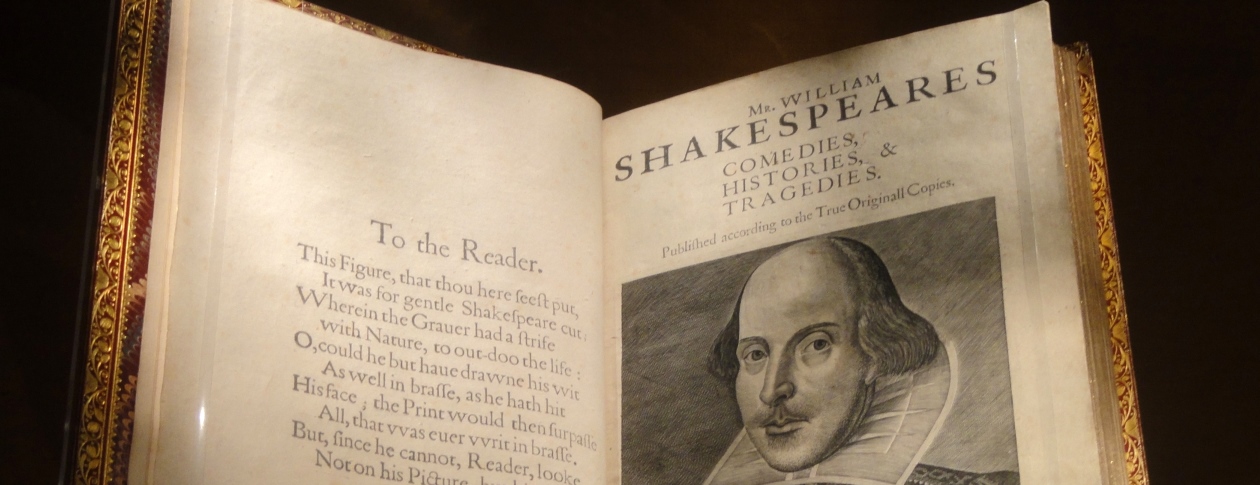
Mrs. Baty: The First Folio.  Many of the plays that we love from Shakespeare wouldn't still be in existence if his friends hadn't decided to gather everything up after his death and get it published.


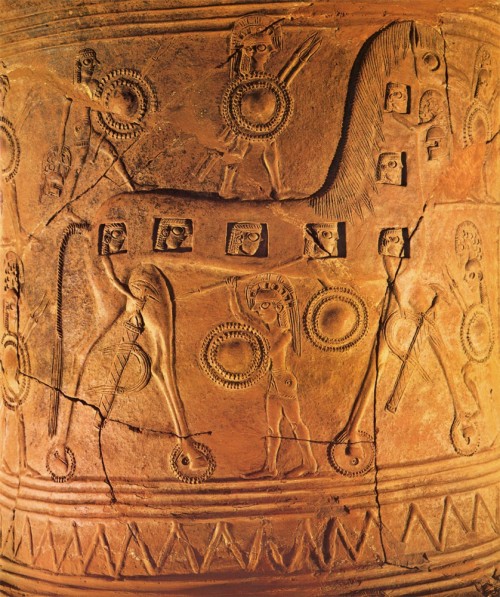
Dr. Fisher: I’m a big fan of the crossover of archaeology and literature, especially in the Archaic period when the Greeks first began writing their poetry down. Therefore, the Mykonos Vase c. 670 B.C. with its earliest depiction of the Trojan War gets my vote for most informative, as it helps us date the canonization of Homer’s epics.

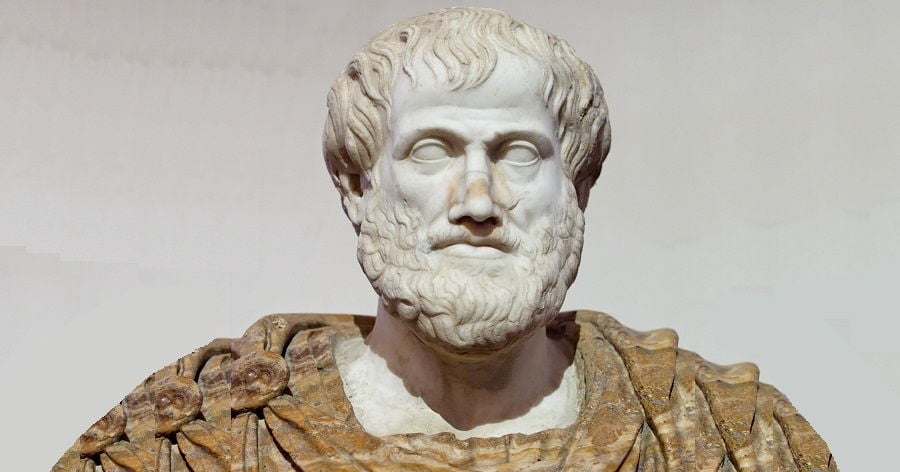
Dr. Haggard: Aristotle. As wiki says, “his philosophy has exerted a unique influence on almost every form of knowledge in the West and it continues to be central to the contemporary philosophical discussion.” And I am in full agreement. He formalized logic and reason. Had the east had a student of Eastern Philosophy such as he, Confucianism and Taoism might not be the fortune cookie mysticism people take them for today.

February 15, 2019

Why Study Shakespeare at All?

By Randee Baty, instructor for The Classical Bard: Shakespeare, at The Lukeion Project

Earlier in The Sassy Peripatetic, I discussed why I teach Shakespeare the way I teach it. That may raise the question, why teach Shakespeare at all?  There has been a group of voices lately calling for the banishment of this author from the high school classroom entirely. Who needs that kind of negativity? Instead of responding to such a foolish suggestion, let’s look, rather, at why we love and still teach Shakespeare 400 years after his death.

Shakespeare writes about the universal human experience. He eloquently and profoundly sums up the range of human emotion. If you’ve felt it, Shakespeare has described it. But can’t modern authors talk about the same things in contemporary settings? Sure, they can and they do. But you’ll find few authors that cover the wide range that Shakespeare covers. From young love (Romeo and Juliet) to mature love (Antony and Cleopatra), from patriotism (Coriolanus) to treachery (MacBeth), the feeling of being an outsider (Othello), the feeling of sheer happiness (A Midsummer Night’s Dream), you would be hard put to find a modern author who has covered the full range of emotion that Shakespeare does.
   
He’s a great storyteller. He was able to take material from other sources, such as Plutarch’s history, and turn it into plays that people have loved for 400 years. His range covers tragedy, comedy, love stories, fairy tales, histories, and melodrama. He includes ghosts and witches, curses, mistaken twins, lots of disguises and a million ways for people to bite the dust. I love to show my students a chart of all the different ways people die in Shakespeare plays. He just knows how to spin a good yarn!
   
Along with great stories, Shakespeare draws great characters. Shakespeare’s characters are deep and complex. They are among the favorite roles for actors to perform because they are emotionally rewarding. From Brutus trying to make the correct decision for Rome to Puck commenting on what fools these mortals be, the characters have a depth of humanity rarely seen in modern drama. This is why students are so excited when we start performing the plays in Week 3 of the semester and why I hear the “I wish class was longer” frequently from my students.
   
It isn’t just the fun that people love about Shakespeare. The sheer beauty of the language draws people back to Shakespeare again and again. There’s a reason that Shakespeare is still the most often quoted English author. His ability to turn emotion into words is unsurpassed. His ability to coin new phrases (most are still in use) and his creation of around 1700 new words show his mastery of language. Shakespeare is one the driving forces in the way English is used today.
   
Shakespeare is a cultural icon. Other than Greek Mythology and the Bible, Shakespeare is probably the most quoted or alluded to writer by modern authors. The well-respected modern absurdist play Rosencrantz and Guildenstern are Dead can’t be understood without a knowledge of Hamlet. The title of William Faulkner’s influential work The Sound and the Fury takes on a whole new meaning to those who love MacBeth.  Modern literature is more complete and enjoyable when you have the Shakespeare background behind it.
   
A well-educated person is presumed to have a grasp of Shakespeare. Just as knowledge of The Iliad and The Odyssey are foundations of a classic liberal arts education, familiarity with Shakespeare is a mark of a well-educated scholar. Homer, Shakespeare and the Bible were the basis of most of the early education in America.
   
As Rex Gibson, an English academic put it, “Every student is entitled to make the acquaintance of genius. Shakespeare remains a genius of outstanding significance in the development of the English language, literature and drama.” He’s a genius we think is important enough to keep in our curriculum.

4 MORE Important College Skills

Learn the Keys to Communication Amy Barr with The Lukeion Project Ever make plans for a special feast and then arrive at the store witho...