September 6, 2021

What Would You Do if You Were Brave?

By Amy Barr the Mostly Fearless

I am not afraid of too many things except squash bugs. There are probably several reasons why this is the case which I’ll discuss below. Some might say I’m lucky. Luck doesn’t have much to do with whether a person is typically fearful or not. Why not?

Being fearful (full of fear) is a choice. I’m not talking about the mundane sorts of worry that hit suddenly when one might have left a garden hose running or that zing of concern about missing a deadline. An all-consuming anxiety -- being full of fear -- means you’ve allowed your imagination to go on overdrive and then you have believed your own overactive imagination. Think of that! Few of us would have much faith in fortune tellers but many of us wholeheartedly believe our own imagined/fictional future without question.

Fear Farming

We aren’t always to blame for our ever-present dread. Two minutes watching or reading the “news” will have us intentionally tied in knots. If you are a student, you might have others help you feel fearful if you don’t take this class, earn that credit, or go to that college. If you are a parent, you might remain ever fearful about what your child might do or be, or not do (or be). All of us are supplied loads of fear fodder because humans respond to fear. We all do stuff, buy stuff, and think stuff we wouldn’t do, buy, or think if we weren’t so afraid. One of the reasons I am not afraid of too many things is that I turned off fear-farmers on T.V., newspapers, and social media. 

Aristotle once said, “Fear is pain arising from the anticipation of evil.”  What if we all could learn to fear no evil?

Fear Framing

One of the reasons I am not afraid of too many things is that my usual response to feeling fearful is research followed by problem solving. In the whole fight or flight scheme, I fight by looking at what I fear right in the eyes. I frame my fear. Framing means “inventing or contriving an idea or explanation and formulating it mentally.” If I become fearful about health, money, the future, or really anything, I start to read everything I can on the subject. I look for explanations. I formulate a plan of action. By framing my fears, I also shrink them to a more manageable size. I build a plan of attack to solve the problem. Others frame their fears by talking them over with sensible, calm, and wise people. What if we could all learn to enlist strong help as we go through dark valleys?  

“I have learned over the years that when one’s mind is made up, this diminishes fear; knowing what must be done does away with fear.” —Rosa Parks

Fear Focus

Fear makes us fight or flee. In our fear we often blame others for things they didn’t do. As a teacher I have fearful students who will blame me because they missed an assignment or did poorly. Sometimes they’ll flee (“I don’t want to take this class anyway”). Fearful people might be enticed to fight the perceived enemy or do even stranger things rather than frame a resolution or think logically to resolve and dissolve their fears. Yoda wasn’t wrong when he said, “Fear leads to anger. Anger leads to hate. Hate leads to suffering.” Even wiser was the philosopher emperor, Marcus Aurelius who said, “If you are distressed by anything external, the pain is not due to the thing itself, but to your estimate of it; and this you have the power to revoke at any moment.”

Seneca said, “Where fear is, happiness is not.” Refocus your fear. Look where it is leading you and choose a better path.

August 30, 2021

Always Read the Introductions to Things

Wisdom for Students Getting Started

Sue Fisher, Wizened Language Wiz

I sing of glossaries and introductions, of maps and charts and tables of contents and a student too eager to start who ignored them all.

woman reading
The following story falls into the “true confessions” department and my willingness to tell it is because of how great a lesson there is in here.

It was my first week of freshman year in college and I had just had my very first Greek class. I was so excited because I had been dying to take ancient Greek since ninth grade and it was finally happening. Growing up in the days before the internet, I had absolutely no knowledge of ancient languages or even what the word inflection meant and in the first class we really hadn’t done much beyond learning the alphabet and discussing course mechanics and some background on ancient Greece.

For our translation homework we were given our marching orders and a syllabus and sent on our way. I got back to my dorm room and looked at the syllabus and noted that there was some reading and YES! my very first translation assignment. I couldn’t wait. I dug right in – to the translation that is.

To this day that fifteen-line translation with most of the vocabulary provided took me longer than any other translation I’ve ever done, and this is saying something, considering I took Greek through the 900-level in grad school.

“How could this be?” you might ask. The answer is simple. I didn’t follow the instructions. Had I read the introduction first, as I had been tasked to do, I would have read the explanatory information about just how inflected languages work. I would have explored the glossary and the maps, resources provided to help with the translation, and I would have cut my work time at least in half if not more so.

After hours of struggle and dismay that I wasn’t up to the task of learning an ancient language, I somehow stumbled back to the introduction and read about what inflected languages are and how they worked. Suddenly everything made sense and translation came easily. The lesson in this story is obvious. As you are all starting your new semester (or new anything), opening those books, getting your initial marching orders, please keep my story in mind. Not only is imperative to really follow directions, but it is also a good idea to really explore all your new books. Start at the very beginning. See if there is a table of contents and any maps or charts. You might not need them yet, but when the time comes, you’ll know they’re there. Check the back of the book. Is there an index? What about a glossary? Are there more charts or tables or maps or illustrations there that you should keep in mind? An exploration of your book will take you no more than ten minutes but can save you oodles of time later. Plus, you’re likely to find something in there that is interesting.

Most importantly, though, especially as you move on to college, it will be assumed that you have done this. Instructors will expect you to be familiar with your books and will assume that you are using all the resources within them. They may even ask homework or exam questions with this in mind. Failure to fully know and use your books can cost you unnecessary points and time.

So go forth and explore your books; read those introductions and italicized things. Be eager but be wise. The time and anguish you save will be your own.

April 26, 2021

Finishing is its Own Reward

A Note for Those Finishing Long Races

By Amy Barr, Latinist and Gardener

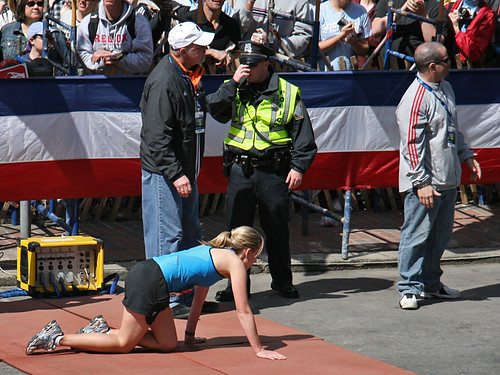
Sprinters know whether they'll be in range to win within the first couple of seconds of a race. Weightlifters know instantly if they'll tackle the challenge set before them. Why do marathon runners force themselves to crawl across finish lines and why do mountain climbers drag themselves wounded and weary to the summit even though they knew well in advance that they weren't going to take first place? The prize of endurance is completion. Completion is often quite enough of a prize.

Perfectionists will often chime, “whatever is worth doing at all, is worth doing well.” This, too, is also true but with a few caveats. Some use this adage as an excuse to quit whenever one feels a job has been too poorly done. For most of us, the least qualified judge of our own worthiness is ourselves.

I’ve seen perfectionism rob many people of their prize of getting things done. In my own profession I see otherwise competent students take a low score one rough week and then I see them give up. The curse of perfectionism typically effects 5-10% of my students and the results are always difficult to watch. I have seen a student give up because she scored a single 89% during a semester of earning upper 90% or above. One Latin student abandoned the class after a mediocre midterm only to discover a month later that he had earned a perfect score on the National Latin Exam. In graduate school I meet a man who had been “working” on his doctoral dissertation for over a decade but could never get it perfect enough to finish.

Few things in life are sprints. Most of what we humans accomplish work out more like a marathon or a rugged mountain climb. We are far more likely to crawl across the finish line or trudge to the summit with a bruise or two than we are to flawlessly sprint to the win. Also just like an endurance race, few adoring fans wait at the end to cheer us on as we finish the long haul.  

Doing things well is a worthy goal but a poor excuse. Life is far too short to give up whenever one’s hope of perfection fades. When you trip over your own feet, expect to hit the pavement. This is normal. The next part of the endurance race makes you exceptional in a crowd of people who give up too soon. The reward comes to those who stand up, dust off, tie shoelaces, and keep going (consider that skinned knee and embarrassed ego as a badge of courage). Finishing is its own reward. There is greatness in simply getting things done.

April 12, 2021

Rookie Writers: Learn to be Limber

There's No Such Thing as One Size Fits All in Writing

By Amy Barr, crusty old author and Latin teacher

    Recently one of our Lukeion instructors shared a note with me from a parent lamenting how her daughter’s once flowery prose had become, at least to her way of thinking, too clinical in academic assignments. What had happened to her daughters formerly ornate and creative approach to writing? 

    My daughter earned her college degree in design. When she started, she was already well versed in ways to express her own creative style. Every class she took and every project she completed forced her to work in unique ways. What she learned in an oil painting class was not at applicable in a class about logo and package design. Her experience in illustration did not apply directly to her design of a large-scale campus art installation. While she never had a single class on developing her own creative style, her ability to create unique pieces not only persisted through her college program, but it grew by leaps and bounds as she learned new ways of expression.

    The connection between design and writing is simple: learning new forms will not erase old skills but build them impressively. Expanding one’s writing mastery requires us to leave our comfort zone and accomplish new modes and methods. 

    Students who enjoy writing typically come to us with experience in writing ornate or even flowery creative fictional prose. As a writer matures, he or she must leave behind comfortable personal styles. A precise literary analysis will differ from a screen play which will differ from a lab report or a speech about economic models or sustainable agriculture. Yet each assignment, method, and mode will expand one's skill.

If a writer can’t adopt new methods and adapt new skills to different types of writing, one’s skills will eventually stagnate. Even wonderfully creative writers must branch out, broaden understandings, and continue to grow. What are some steps to help in this process?

Appreciate new rules for each different type of writing project.

    Creative writing and academic writing share a few elements, but objectives are as different as mud and muffins. There are new rules and different expectations for academic writing. What worked well in emotive fiction must be set aside when composing a good lab report or analyzing a Latin epic. Many of our best and brightest writers feel the sting of disappointment when they get their first writing score back. “What happened? This is usually my strong suit!” 

Where readers once demanded strong visuals and gushing narratives that tug at the heart, they now demand precision, objective analysis, simplicity, and clarity. Set aside those rococo turns of mood and tense for now. Concision and accuracy must rule. Learn to be limber! There will be times for every kind of writing. Adding new skills will always serve you well.

Celebrate the differences and enjoy the challenge.

Embrace every writing mission and play by the rules given. Students who struggle the most want to change every book report, essay, and research paper back into the writing style that makes them most comfortable. This is like trying to apply the rules of tennis to swimming. Don't critique your research paper using the rules of creative writing. If you are given any writing challenge, follow those rules and do your best to learn new methods and modes.

Embrace feedback as your best path to improvement. 

    Instructors spend long hours giving feedback over writing assignments, and guess what? That feedback is always in the form of recommendations for improvement. Young writers don’t know what they don’t know. Learning how to compose a good thesis, or the rules of citation, or the specifics of quoting sources come only with effort. Instructors spend a lot of time trying to help you iron out mundane wrinkles.  

    Getting feedback is difficult, especially if we feel like we are good writers. If we’ve spent effort doing our best, anything less than a glowing report feels harsh and personal. Anger and disappointment are common responses to what was intended as edification and education. Instructors have exactly one reason to spend hours pouring over your writings: they want you to get better at writing! Never resent those who give feedback.

    All the best authors in the world have had readers and fellow writers edit and give copious feedback before works go to press. This most painful process makes all the difference. It is the finishing polish, the perfect cut, the final touch. Embrace feedback as your best path to improvement. Singers can hear themselves sing. Painters can see how people react to their art. Writers must rely on truthful editors. 


March 8, 2021

3 Beautiful Thoughts by Marcus Aurelius

Some Imperial Words of Wisdom During Times of Trouble & Peace

By Amy Barr, Wizened Sage of Online Education at The Lukeion Project

Marcus Aurelius was the last of the Five Good Emperors. He was not only a good emperor, he was also an excellent philosopher. His deep thought life prepared him for the many hardships he would experience. He fought endless defensive wars along Roman frontiers. He endured the early death of his closest loved ones. He suffered the failure of his soon-to-be successor Commodus to develop into one who would rule well (Commodus would instead gain immortal fame as the first NO-GOOD emperor). 

Most relatedly to us, perhaps, Marcus Aurelius lived during the Antonine plague (Plague of Galen) which decimated the Roman world in a far more serious way than our current health crisis. At least 5 million perished during Marcus' pandemic, but likely far more as whole towns and cities perished, fell to ruin, and left no historian to count their numbers. Thousands died daily in Rome and the sight of  carts piled high with the dead would traumatize Rome's survivors. The Antonine plague caused societal disruptions, not the least of which was Rome’s failure to defend herself from invaders while her economy suffered collapse as most basic services in defenses, transportation, agriculture, and trade came to a halt.

Marcus Aurelius sustained himself by journaling. Thankfully, those notes to himself became a book (The Mediations) about how Stoicism served him well during times of hardship. Stoicism, he argued, would give us the type of mental fortitude needed to help us through the worst of times. So many pearls come from Marcus Aurelius' Meditations that I've narrowed down three main concepts. 

Define what you yourself can control, let everything else go.

“If you are distressed by anything external, the pain is not due to the thing itself, but to your estimate of it; and this you have the power to revoke at any moment.” 

“You have power over your mind - not outside events. Realize this, and you will find strength.” – 

Marcus Aurelius, like other Stoics, would agree that worry is useless. It is best to focus only on what each of us can personally change (our opinions, goals, desires, actions, reactions). Do not try to control the things we can’t change (the past, the future, other people).

Live well while you yet live.

“When you arise in the morning think of what a privilege it is to be alive, to think, to enjoy, to love ...”

“It is not death that a man should fear, but he should fear never beginning to live.”

“Do not act as if you were going to live ten thousand years. Death hangs over you. While you live, while it is in your power, be good.”

Marcus Aurelius would affirm that life is a gift that we must never diminish while we still breathe. We always have the option to exercise control over ourselves and our attitudes during tough moments. If we have a day left or 5 decades yet to live, live with much energy. 

Allow nothing to divide yourself from others.

“When you wake up in the morning, tell yourself: the people I deal with today will be meddling, ungrateful, arrogant, dishonest, jealous and surly. They are like this because they can't tell good from evil. But I have seen the beauty of good, and the ugliness of evil, and have recognized that the wrongdoer has a nature related to my own - not of the same blood and birth, but the same mind, and possessing a share of the divine. And so none of them can hurt me. No one can implicate me in ugliness. Nor can I feel angry at my relative or hate him. We were born to work together like feet, hands, and eyes, like the two rows of teeth, upper and lower. To obstruct each other is unnatural. To feel anger at someone, to turn your back on him: these are unnatural.”

“Reject your sense of injury and the injury itself disappears.”

When times get tough, humans adore assigning blame and fault to others. We are all much more alike than we are different. Do everything you can to find unity with others. Reject the compulsion to seek division.


February 22, 2021

Survive and Thrive in Online Classes

6 Top Tips to Make Online Learning More Effective

By Amy Barr, Wizened Sage of Online Education at The Lukeion Project

2020 was one for the history books. Those same books will, no doubt, mention the sudden demand for online education world-wide when teachers and students alike found themselves in unfamiliar territory. Educators sought to apply in-person teaching skills to an online world while students likewise struggled to adapt when every educational expectation changed instantly. Whole school systems stopped functioning. It was a mess for many people.

The unfortunate academic side-effects of the 2020 debacle will be inspiration for many volumes, no doubt. So why not get started here? 

Not all online education is the same. We fear people will begin to avoid online classes due to negative encounters with inexperienced educators. We recently had a parent comment that she loved how our classes didn’t consist of videos of the instructor rambling and drinking coffee like her child’s other classes. There are some fantastic tools and techniques to keep students engaged online. Not every program or educator is aware of these tools! 

Some students have few choices but to stay online—good, bad, or meh—for the foreseeable future. They may be faced with a future of not-so-great online classes combined with lots of not-so-great prospects for doing anything differently. So, as a wizened sage of online education, I offer 6 tips for making the best of any online education.

1. Be the boss of you.

*SOME* educational environments promote poor time management skills and poor executive function by offering too many reminders, too many try-it-again chances, and too few expectations that a student can succeed. When students move online, their instructor also moves to digital communication. Published due dates on syllabi, notes on screen, or weekly emails now require that little extra step. Students need to check what’s up next and how to do it because nobody plans to come to your desk to remind you. Your educator doesn’t have time to text you (in case you forgot to look at email) or call you to make sure you read your handouts. All of that is your job now.

If you, dear student, struggle with this sort of thing now you will also struggle in college, career, and life. Promote yourself to being your own boss. Make yourself do things you’d rather not do (study vs. social media) when you’d rather not do them (first thing in the morning rather than “later when I feel like it”) without multiple reminders and do-overs. You are in charge of you!1

2. Schedule ardently

Everyone should have time in their schedule to do pleasant things! All of us should stop and smell the roses (or whatever). One of the best ways of safeguarding the opportunity for doing what we enjoy, is to also safeguard the necessity to get work done when it should be done. I’ve written plenty about setting up schedules and sticking to them. The benefit of scheduling yourself is so you get things done so you also get to enjoy the fruit of your labor with some glorious unstructured down time! Give two students the exact same number of tasks: The stressed depressed student tends to be the one who never schedules anything for himself and who always just waits for the right mood to hit. 

3. Education is on a computer or not by a computer.

If you have an actual human teaching you online, remember that human being is … human. Communicate! Ask questions! Tell him or her you’ll be late (not just sleeping through class). Let him or her know you could really use a second review of that difficult topic covered last week. Say please and thanks. Let him or her know you enjoyed an especially helpful session or that you are thankful for the feedback that got you through a tricky assignment. When that very human educator forgets to post a link or open a quiz on time, be nice. Send a respectful email. Get to know that educator a little bit so he or she knows you, too, are working hard to have a good educational experience.

4. Accountability: you need some!

It never hurts to let somebody else know you have big projects coming up that will take extra time. It never hurts to let them know you have set the goal to study a certain amount each day, or you plan to dedicate time to reading during breakfast, or you have set the goal of completing X, Y, and Z before lunch every Friday. Whatever your goals are, share them with somebody else as an accountability partner. This can make goals (small and large) seem both more do-able and celebrate-able. When you have moved to online education, you can really benefit from setting more structure in place. Finding somebody besides the very-distant educator to share the struggles over goals, projects, or tricky tasks, may help you to stay on task. Plus they are great to help you celebrate success when it pays off.

5. Never assume there’s less work just because it is online.

We have lots of new-to-online people signing up this year. That’s great! Welcome! But we know some misconstrue a one-hour-per-week class as a one-hour-per-week time commitment. Online classes normally have a better economy of time usage. There will be a time to communicate information followed by the expectation that students practice and perform that information outside of live “class.” An online Latin 1 class will take about as much time as a brick-and-mortar Latin class (5 to 7 hours a week) even though nobody is making you sit at your desk at the same time each day. Expect to be about as busy in an online AP class as you would if you were attending in person. So take care you don’t overschedule yourself or your student! 

6. Learn how to learn. 

Most come through their educational years knowing how to be taught but they may not necessarily know how to learn. Figuring out what kind of trick questions your English teacher loves on pop-quizzes is a matter of learning how to be taught. Guessing how to “game” the system so your never work too hard in a class is agility at being taught not the ability to learn. 

Memorize a stack of biology concepts or Spanish vocabulary today and remember those words in a week. Sort through a half dozen philosophers and be able to explain them to a friend on Saturday. Master some geometry formulae but put them to real use when you build something for yourself. Decide you like to read through an impressive piece of literature and actually accomplish this goal. All of this is where the real stuff happens. 

Knowing how to learn is not a skill reserved for especially smart people or especially rich people or for those with tons of spare time on their hands. Master a few techniques to help motivate yourself when you’d rather nap. Come up with a method and reward system to finish 3 short writing projects, a discussion question, and a vocabulary quiz before dinner.

Learning how to learn will make any situation, online or in-person, better. Learning how to learn is about self-management, understanding how (and when) your brain functions best, and getting yourself to do the tough stuff when you really don’t want to do it. Know yourself. Some people are slow readers, some people don’t like math, some have a hard time paying attention to others talk. Everyone has something to figure out about themselves as they learn how to learn. It takes time. Don’t wait to be taught. Learn how to learn.


February 15, 2021

Handy Academic Essentials Tools

(From the Department of Shameless Self-Promotion)

By Amy Barr, Lively Classical Guide at The Lukeion Project

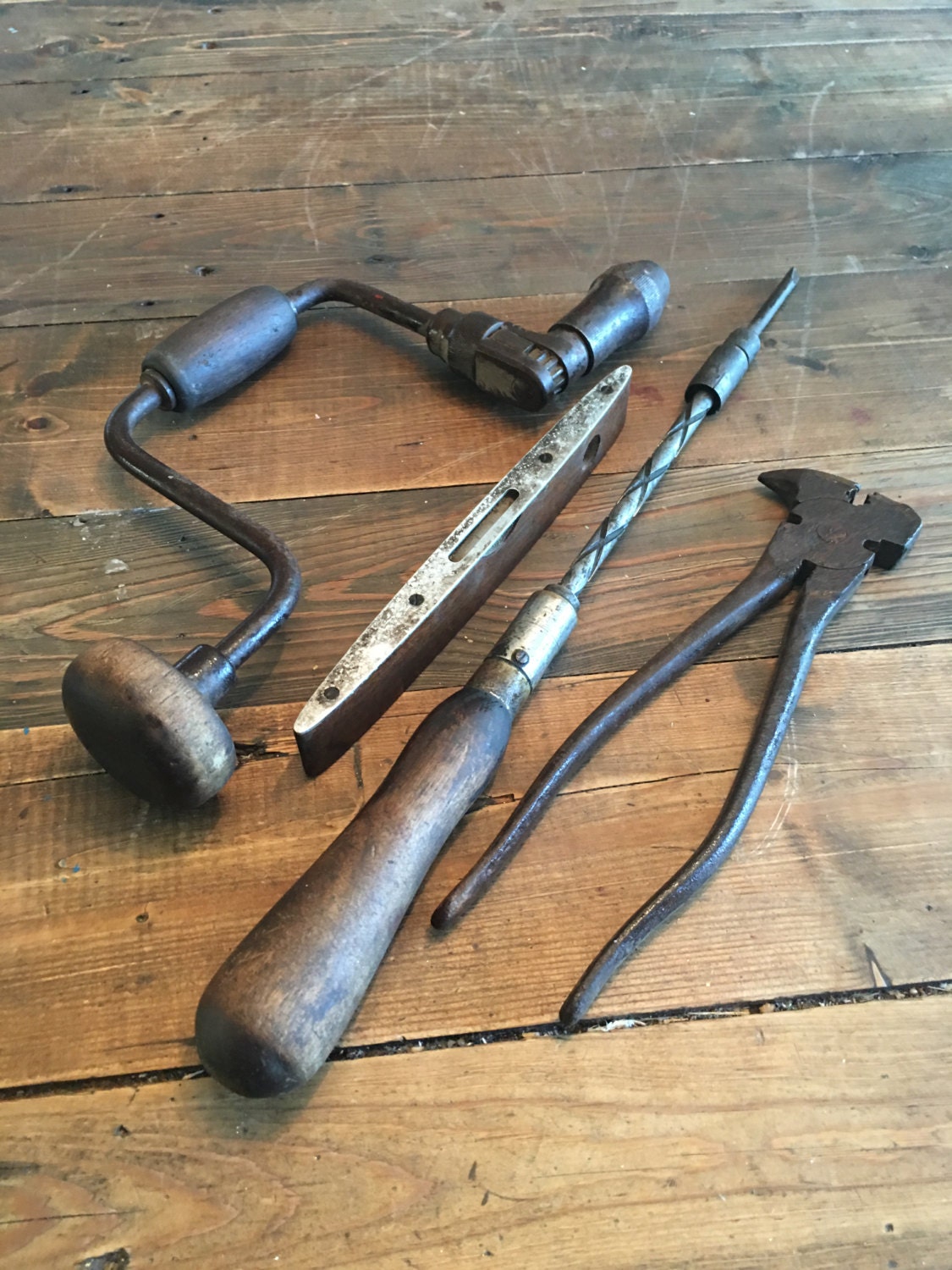
picture of some tools
Let me tell you about a new thing we'll be doing in June! While finalizing the schedule for the next academic year, our clever Lukeion instructors were standing around the online watercooler recently. After covering an assortment of important topics like how many students hate raisins but would happily jump out of an airplane (at least according to their answers in class polls), we turned to the topic of how to best equip high school students for life. Nope, no weird social engineering goals here, but we did observe that most of our students could use lot more support and instruction using certain academic tools.

When my three now-adult-kids were prepping to start college after admissions formalities were finished, they were required to take placement tests in various academic skills. Depending on results, they might be expected to take remedial courses or complete a few tutorials to bring them up to academic speed in time to begin their first semester. Thankfully they placed well, but I learned a few things about what we can do to better prep our college-bound students.

Some placement subjects are predictable. Students are tested on competency in writing, English, and grammar skills and even typing speed. They are examined to determine proper placement in math and other academic topics that are commonly lacking for new college students. They are also tested on academic essential apps., namely MS Word, PowerPoint, and Excel.

These program/app placements are not just a push for students to buy them (at most universities, students are given access to these either for free or at a huge discount). Instead, these apps are the primary means of communication a student will need at the college level. If they don’t have these app skills, they will need to develop them quickly and early.

First and foremost, students must carefully format every document that is ever submitted at the college level. If a student turns in research work in the humanities, they’ll need to know how for format in MLA style sheet most of the time. If they work in the sciences or other fields, again, they’ll be expected to format all their work carefully according to assigned style sheets. Most writing projects at The Lukeion Project require extremely specific formatting to get students accustomed to methods they must employ when creating written projects.

On average, 80% of even our brightest college bound students are clueless about using good formatting methodology in MS Word. We can tell you stories for hours about how students have variously (and hilariously) misinterpreted how to perform basic formatting tasks in assignments. Often parents -- who often have no formal training in Word -- "helped" students make those formatting mistakes. Don't even get me started about how "double spaced" has gone off the rails more than once! Suffice it to say, it is never too early for a student to learn how to use this app effectively. A student needs to use Word as early in middle school as possible.

Second, most degree programs today correctly require students to take at least one semester of public speaking. We agree! The art of persuasive presentation and communication is important enough to us that we offer two semesters of Rhetoric at The Lukeion Project. No matter what you plan to do in life, the need for being a persuasive and clear communicator is inevitable. One can say they “dislike public speaking” all they please but clear communication is an absolute must for most. Learn early how to present information clearly and effectively with MS PowerPoint.

Third, the need to organize information or data is fundamental in every field of study. MS Excel provides a highly flexible way to organize information and even compute data. Most young adults could really benefit from the ability to track monthly expenses or school bills in Excel, but most young college students can also use that same program to organize research notes, keep track of a study group’s progress in a semester project, or follow a series of data sets in their biology program, chemistry class, or statistics course. It can be a very handy tool indeed and reasonably intuitive once you get started.

This summer through The Lukeion Project, students can register for a “boot camp” in each of these three programs/apps. Naturally all three of them will be a benefit to use right away in high school, but certainly these apps will be absolutely necessary in upper-level high school and college. Students need to have their own access to these apps on home devices to participate in the courses, but each boot camp will take a student through many of the most important rules and methods of using these tools now and in the future. Adults who need these same tools are also invited to join us. We won't blow your cover!

We decided to add a fourth Academic Essential Bootcamp to the summer workshop list: The fundamentals of College Writing is a four session class designed to give the fastest foundation to collegiate writing requirements available. If a student somehow never had time for our Skillful Scribbler (late middle school/early high school) or our semester courses Composition/ResearchWriting (11th or 12th grade), this little short workshop will get a student started for his or her first college tasks without (hopefully) needing a trip to the writing lab right away. Most underestimate how much more writing preparation is needed to achieve calm success in college assignments. This is a great last-minute patch to help any late-high school through early college student.

January 25, 2021

The All-Purpose Recipe for Success

Five Ways to Get Things Finished

By Amy Barr, Lively Classical Guide at The Lukeion Project

It’s a new year and, for many, a new semester. Many of us, despite our current situation, feel a sense of optimism or at least hope that things will improve. This is certainly true if we can gain better control of our own habits. I’m far from expert in this area but I can let you in on a few secrets that help me run a Latin program, write blogs, and keep a mini farm fed and watered even while I get most weekends off. Here are a few ideas to help:

What Gets Scheduled Gets Done

I’m a big fan of my Full Focus Planner by Michael Hyatt. If you don’t want to get a version of his planner, find (or build) any system that works for you. Anyone who learns how scheduling priority tasks is the best method to finishing them will agree with another famous scheduler, Stephen Covey who said, “the key is not to prioritize what’s on your schedule, but to schedule your priorities.”

Each day I schedule my “Big 3” things to finish before my day is done. These goals must be bigger than something that takes only 5-10 minutes to complete and they should be in addition to other scheduled tasks, plus they must move you forward through your vast to-do list for the week. Each day and week I schedule Big 3 goals, then each quarter and year I have other scheduled priorities, my smaller goals all helping push me closer to completing grander annual goals.  

Most of you should start with just a daily Big 3. If you are a student, your Big 3 might be “prepare for and complete Latin quiz,” followed by “finish flash cards for chapter 11,” and then “complete outline for Friday’s essay.” If they are in your Big 3, don’t stop working until you finish, even if the actual deadline isn’t for several days. If you finish everything early, the extra time belongs to you! In other words, you are creating new deadlines for yourself and you are sticking to them.

Keep Sacrosanct Time Boundaries and Rewards

There are a variety of methods to keep one’s time boundaries firm in defense of others who might want to trounce all over them. Many of us have a friend or sibling who regularly gets us embroiled in epic level time-wasting! Your biggest enemy will likely be yourself. You might schedule an hour to work on something included in your Big 3 only to discover you just wasted that precious time on something foolish. How do you outwit your worst schedule enemy when he or she is yourself?

First, decide on a limited work period during which you will focus fully (25 minutes is a good starting point, some do better with 20, others with 35). Second, get rid of all time wasters. Visit the restroom, get a drink, put away your phone, get away from video, hide your favorite book, tune into music without words, etc. Finally, set a timer and keep working until you’ve completed the whole time period focused at your task (yes, start the timer again if you get distracted). Include a small celebration each time you successfully complete your whole time block without getting distracted. Stand up, stretch, watch a cat video, read a few pages of your book, whatever. Celebrate the little win. Take only 5 minutes and get back to it.

Now, repeat again and again. Soon you’ll discover that you have improved skills on focus and concentration so that sometimes you keep working past the little deadline without thinking about it. The Pomodoro Technique recommends that you give yourself an even bigger treat at the end of four sessions but, again, celebrate that win.    

Perfectionism is the Mother of Procrastination

I love to watch reality competitions in which skilled and creative people compete to make the best bake, best blown glass, best sword, or best creative project during a set period. Invariably there will be a competitor who laments (sometimes quite proudly) that he or she is a perfectionist. Isn’t that a good thing when you are competing for who’s best at something? Watch enough of these shows and you’ll discover that most perfectionist fall apart early in the fight. They struggle with time management and they lose perspective on priorities. Perfectionism is the mother of procrastination. They reason they should spend extra time on a certain detail because perfect is better! Prioritizing perfection over completion always has similar results. 

Completion is Always Better than Perfection

In these same reality competitions, expect to see contestants who—often through no particular fault of their own—will have everything fall apart for them: The bread doesn’t rise, the metal cracks, the glass breaks, they get conked in the head, or they turn an ankle. Perfectionist often give up at this point. “If it can’t be done perfectly,” they reason, “why do it at all?!” 

Nothing could be further from the truth. Life is so full of imperfection that you might as well snuggle up to it and make if your friend. Only finishers stay in the competition. Nobody cares how perfectly you start a task if it is never done. Completion wins over perfection, every time.

Positive Thinking as a Powerful Tool

I know (and am related to) a fair number of people who believe it is poor form to be too optimistic about anything. They prefer to take a dim view of the weather, their skills/talents, and their prospects. If everything falls apart, nobody can ever accuse them of being too optimistic, as though that is a bad thing. When looking at the future (a day, week, or year) there's no default. We must choose our outlook. We can choose to “hope for the best” or “plan for the worst.” Most of us do a bit of both. Let me encourage you to allow the pendulum to swing more frequently toward “hope for the best,” you’ll find that even when things don’t go as smoothly as you’d like, you’ll whether life better. In the long run, it is always better to be considered too optimistic. Give it a try.   


Curiosity Beats Confidence

By Amy Barr with The Lukeion Project Is it true that there’s no such thing as a dumb question? Of course there are dumb questions. As a te...