September 19, 2022

3 Ultra Practical Life Skills

Grow Academic Skills While Becoming a Better Human

By Amy Barr at The Lukeion Project
I speak to a lot of home educators at conferences. Some families are very practical. They make life skills a big part of a child’s education. At the same time Billy is learning chemistry, he is applying that knowledge to cooking a delicious dinner. Other families tell me that their children aren’t expected to do many chores or family tasks while their student must focus on academics at all costs. Mastering certain mundane (non-academic) life skills is the best way to develop strong academic faculties while getting ready for life.

Learning how to follow directions, how to develop multi-stage projects, and how to focus on details form the three-part groundwork necessary to accomplish practically any goal in life. Here are my favorite three (very non-academic) ways to develop yourself academically while also increasing enjoyment in life.

Learn How to Cook

How well a cook can read and follow directions is the main difference between terrible horrible no-good chocolate chip cookies and the epic kind that cause the whole family to sing one’s praises. Sure, some people go through life happy dumping frozen nuggets out of the factory package but they’ll never beat grandma’s recipe.

When I was around 8 years old, I received a cookbook for my birthday. It was brightly illustrated, and it broke down instructions to manageable bits. I began to work my way through that cookbook. After a year or two of hard use I had prepared every recipe (even the ones calling for lime Jello). After enjoying initial success and after recovering from initial failures, I was willing to take on more difficult projects with more elaborate steps. When I was 11, I remember making an elaborate French dish with layered crepes, beautiful vegetables, and a creamy bechamel sauce. I prepared the dish from memory after watching Julia Child make it on one of her episodes. By the time I was 16, I was the head cook at a summer camp making meals for 100-200 people to earn money for college. Well before the days of heat-and-serve industrial food, everything I cooked was from scratch in a huge wood-burning stove. I did not have a cookbook there! Instead, I had learned how to follow instructions and follow the rules of cooking years earlier. It turns out that roast turkey and the side dishes for 5 people is not much different than preparing the same meal for 150 people aside from time and proportions.

Start easy! Follow a simple recipe that sounds tasty to you, master what it takes to multiply the recipe to increase proportions, and then challenge yourself to try more and more difficult projects. Learning how to follow recipes taught me the rules of food. Once I knew the rules, I rarely needed recipes anymore while I also learned the cooking steps that I could omit, ignore, break, or slightly alter without issue.

This is true for most things in life. Learn the rules of the game, follow them, and practice them well. Once you are comfortable with the skill set (cooking, martial arts, playing an instrument, building a model, crafting something, or writing a lengthy research paper), you can safely omit, ignore, break, or alter SOME parts of the instructions while you must carefully observe the important procedures that make the recipe or project work.

Learn to Grow Vegetables

Ever had a long school project that requires research, an outline, several rewrites, and lots of project management skills like patience, adaptability, and critical thinking? Many students are overwhelmed by the scope of such a long project. They often skip groundwork tasks (writing an outline or carefully evaluating resources and selecting knowledgeable research) but then try to jump right into the bulkiest part of the project without adequate preparation or planning. Science fair projects have been a staple of in education not because science teachers need another paper-mache volcano to clean up, but because students must learn how to plan, research, and develop long term projects.

There are a lot of ways to develop project management skills in life but the most practical way is to learn how to garden whatever you have a little spot in the sun, however big that spot might be. Sure, if all you have is part of a patio you’ll have different challenges than if you have a whole yard but everyone should start with a patio anyway!

Months of organic fresh veggies, plenty of sunshine, physical exercise, and brain-building mental challenges are already part of the paycheck for growing a vegetable garden. Successful growers learn essential project management skills plus how to problem solve. With a little tenacity (maybe a LOT of tenacity) you’ll figure out how to overcome challenges and work out how to harvest tasty rewards while building essential life skills.

Risk and cost management comes in as you balance planting times, frost dangers, heat, watering, and the expenses of growing from seeds or starts while squirrels, bugs, and deer threaten. The importance of research becomes clear as you solve the riddles of choosing cultivars that work in your area plus how to treat any pest or disease challenges.

Planning and forecasting the 4, 5, or 6 months you have for active growing, succession planting, and harvest echo what you might be tasked with in challenging academic program, college class, or career path. Leadership and good communication play a role when you need help weeding, crafting a new arbor, or establishing a new planting area.

Time management means you learn to attend to the garden’s needs while issues are still practicable. In the end you’ll not only have delicious things to eat (and share with neighbors and family) but also patience, adaptability, and critical thinking will develop as you combat your garden challenges and reap rewards.

Learn A Fiber Art or Two

Being able to focus on a single task is rare. Most of us have popcorn brains because we must multi-task constantly. We live cluttered chaotic lives in which we have phones, devices, texts, projects, entertainment, demands, obligations, people, appointments, classes, cats, assignments, dogs, and basic daily needs all competing for our attention. Our brains pop back and forth from emphasis to emphasis through the day. We’re lucky to spend 15 whole minutes concentrating fully on a single task without interruption so how could fiber art help this mess?  

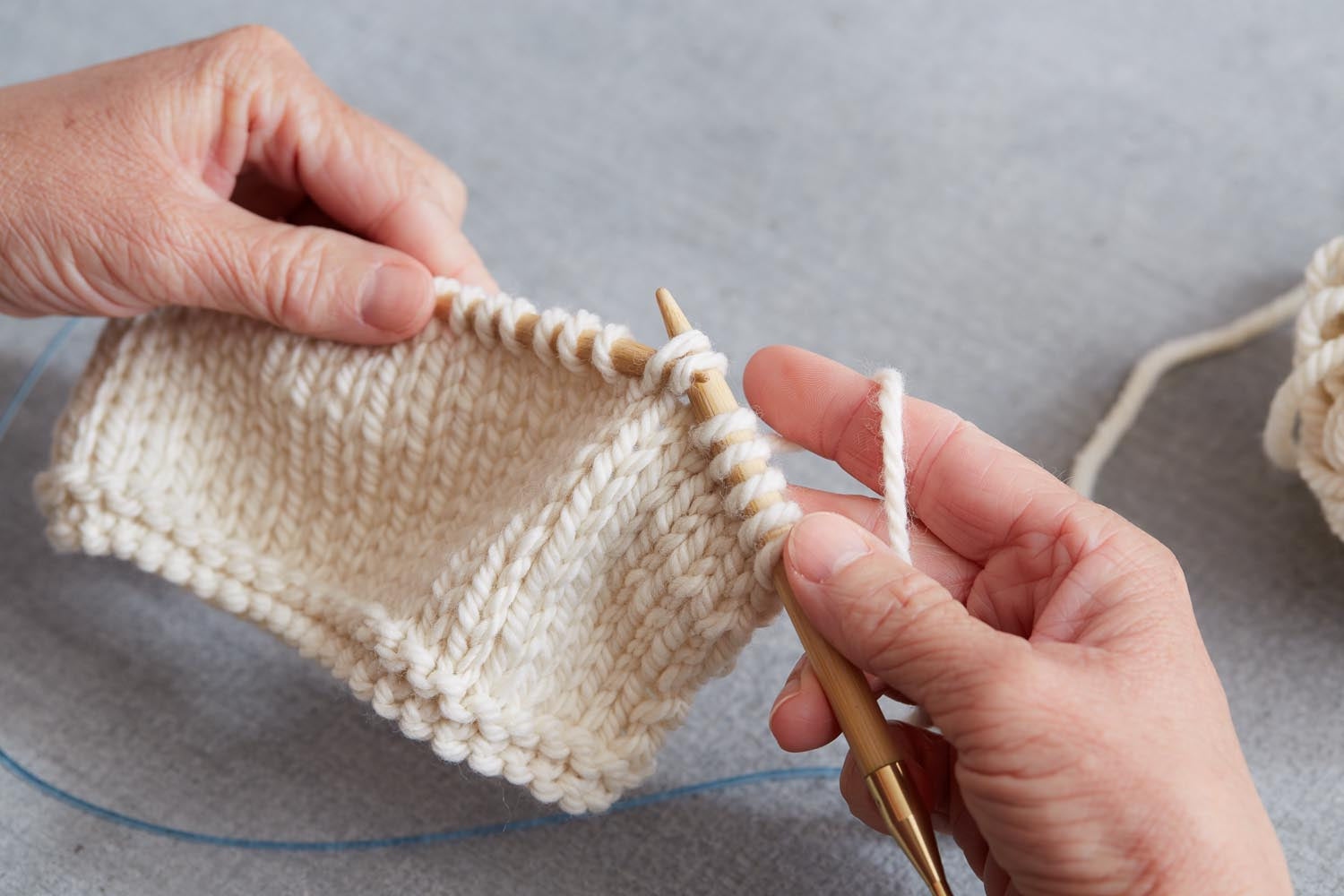
Learning to knit, crochet, sew, stitch, weave, macrame, or even do leather work, etc., all impart the important life skill of paying attention to details in the most relaxed yet focused way possible. Work a little cross stich project. Finish a simple crocheted scarf in your favorite color. Figure out how to macrame a hanging for your favorite personal space. To accomplish even the smallest project means you must spend undivided time focusing on the details of something you will enjoy and appreciate afterwards.  

Start slow and build your skills. Focus and attention grow with practice. If you are knitting a cool little basketweave potholder, you can’t look at your phone every 3 minutes or you’ll drop a stitch! If you are counting cross stiches, you’ll have to gradually grow out of your popcorn brain habits or you’ll find yourself redoing your work three or four times. Ever try sewing a quilt? It is all about focus or you’ll wind up ripping out seams and starting over.

The best thing for our poor modern ADHD popcorn brains is gradual daily training in focus and details on things that are soothing and fulfilling to give us a nice payday for our efforts!

So, don’t omit these practical skills from life because they “interfere” with the demands of our academic development. Indeed, these things build and inform our abilities in the classroom and while making life a bit sweeter ever more.    


September 9, 2022

Why Study Philosophy?

Make an Investment in Clear Thinking and Logic

By Regan Barr, philosophy instructor with The LukeionProject

Plato has preserved a humorous anecdote about the “first” Greek philosopher, Thales of Miletus. As the story goes, Thales was walking along staring up at the sky and pondering the mysteries of the heavens. He was so oblivious to his immediate environment that he failed to notice a well in his path and fell in. A Thracian servant-girl was nearby to observe his misfortune, laugh at him, and spread the word abroad. Presumably, she also called for help to get him out.

The point of this short story was to poke fun at the Pre-Socratic philosophers, whom many Greeks stigmatized as being more interested in the stars and the heavens than in the path right in front of their feet. They believed that philosophy (the love, or pursuit, of wisdom) was both impractical and a waste of time. Some people today still believe that.

So is there any practical benefit to studying philosophy? I would argue there are many, but I’ll just mention three.

1. The study of philosophy helps develop critical thinking and problem-solving skills

“It’s easier to fool people than to convince them that they’ve been fooled.” This quote is often attributed to Mark Twain, and while we have several similar quotes from him, there isn’t definitive evidence that he ever said or wrote it. Nevertheless, it’s certainly true. Humans are proud creatures, embarrassed and unwilling to accept that they’ve been duped. In fact, many people will continue to cling to a belief even when confronted with irrefutable evidence that these beliefs are based on falsehoods and mythology rather than fact.

Our society is experiencing a crisis in critical thinking. Students are often taught to believe and obey rather than to question, think, and evaluate. They are taught that “authority figures” should not be questioned, even if there is evidence that their statements are untrustworthy. Essentially, students are taught to place blind faith in these figures.

As students engage with the great thinkers of the past and of our own time, they sharpen their skills in research, logic, and evaluation. They come to understand the rules of logical argumentation and learn to identify errors in reasoning. By observing how philosophers have carried on a dialectic through the centuries, one arguing for one position and another responding with a counterargument, they can begin to identify and correct problems in their own thinking and in the arguments of others. The study of philosophy is one of the best antidotes to blind trust, and a catalyst for independent reasoning.

2. The study of philosophy helps develop logical and persuasive methods of communication

The Austrian philosopher Ludwig Wittgenstein wrote, “To convince someone of the truth, it is not enough to state it, but rather one must find the path from error to truth.”  His message is clear: to change someone else’s mind, one must not only be correct, one must also be persuasive. The student who studies Plato’s Socratic dialogues will appreciate not only Socrates’ civility in the face of sometimes confrontational adversaries but also the way that he gently guides his debate partners to recognize their own inconsistencies in reasoning.

A group of ancient philosophers called the Sophists claimed that they could defend either side of an argument equally well. They were rightly criticized when they used their oratorical skills to convince people to believe untruths (“making the weaker argument seem stronger”), but their mastery of the art of persuasion is undeniable. Many ancient orators and statesmen, including the famous Athenian Pericles, sought out the Sophists to teach them how to move their audience to action. They were persuasive because they combined carefully crafted arguments with an understanding of their audience.

Today accusing someone of “sophistry” is an insult, but now more than ever, individuals must be prepared to defend their beliefs with persuasive arguments, AND to know when they are being manipulated by sophistry and demagoguery. In 2004, Desmond Tutu famously said, “Don’t raise your voice, improve your argument.” The ability to improve one’s argument and persuasively deliver a defense of one’s position, whether written or spoken, requires well-organized thoughts, clarity of expression, and an understanding of the audience. This is one of many important benefits of studying philosophy.

3. The study of philosophy moves one to consider the bigger, but oft-neglected, questions of life

Many students enter an ancient philosophy course expecting the ideas of the ancients to be somewhat unsophisticated. After all, hasn’t the human race progressed so far over the intervening centuries that the early philosophers will seem fairly simple-minded by comparison? Nothing could be further from the truth.

It is true that our understanding of our physical world has moved far beyond what the ancient philosophers could have even imagined. But some of the questions they grappled with remain unanswered. For example, how can we “know” anything? This is the question of epistemology. Can we be certain that our brains are interpreting stimuli correctly? In fact, how can we be sure that we’re not laying in a coma somewhere and everything around us is an illusion?

Then there is the question of ethics, to which Socrates turned our attention. Is there a difference between “good” and “evil”? If so, how do you defend your definition of “doing what is right”? Does the definition of bad or good behavior change depending on our circumstances? Do we have any obligations to our fellow-humans? To our planet? To other creatures with whom we share our world? And if so, from where do these obligations come? Are they based entirely on tradition, or is there some source we should consider authoritative in the realm of ethics?

Grappling with questions like this are not only mind-expanding, they are life-preparing. They move us past the mundane trivia that consumes much of our daily lives. When we are faced with difficult decisions about family, government, or health, on what principles will we make our decisions? If we have consistently lived our lives in accordance with a set of principles that we’ve chosen intentionally, perhaps the correct choice will be more apparent, even if it’s not the easiest one.

If you’re still reading, you know my answer to the question posed in the title of this blog, and I’ve only scratched the surface. Studying philosophy is an investment in clear thinking and logic, and it’s always worth it!

September 2, 2022

Objective Research Writing:

Be Like Switzerland

By Randee Baty at The Lukeion Project

    What is Switzerland known for besides its fabulous chocolate, beautiful mountains, and high-quality knives? It is neutrality, of course! You, as an academic writer, should strive for that same quality. Strong academic writing is neutral and objective. In a world where feelings sometime seem to prevail over reason and truth seems like a moving target, scholarship should be a world where evidence, neutrality, and objectivity rule. Contrary to what many students may think, professors do not care how you feel about anything, at least as far as academic writing is concerned. They care what you can validate objectively with evidence.

Objectivity is crucial in academic writing because it ensures academic honesty. The reader should be able to trust that what a researcher is saying is based on evidence and findings, not on the author’s opinion. A quick way for me to tell whether the paper I am reading is based on evidence and not on opinion or feeling is to watch for words such as “unfortunately,” “sadly,” or “regrettably.”

“Unfortunately, a flight to Mars cannot happen in this decade” tells me that the author has formed an emotional attachment to her subject. The author is not just reporting evidence, but also editorializing on it. “Happily,” “fortunately,” and “luckily” are just as bad. Rather than analyzing and interpreting the data she finds, she is offering her opinion about it. Leave anything out of your academic research writing that spell out your feelings on the subject. Analyze and draw conclusions about your evidence and your topic so that the reader can clearly see what your interpretation of the data rather than your feelings about the data. You may conclude that colonizing Mars is doable and worthwhile. In formal academic writing, the reader should not know whether you love the idea of becoming a Martian. He should only know your conclusion based on data. Once you spell out how you feel about your topic, all research going forward will be—and should be—suspect in the eyes of the reader.

Not only do words such as “sadly” or “luckily” show your feelings about the subject, but they also take the writing from a formal tone to an informal tone. This alone is enough to cause the reader to question the seriousness of your work. Solid research is harder to produce than opinions. A piece filed with personal emotions about a topic may seem more like a blog or op-ed and give the impression that that the paper is poor effort. Communicating evidence well is challenging work. If you say, “As shown in the Journal of Mars Exploration, the cost of colonizing Mars may be less than NASA originally thought,” you will get a better response from your professor than if you say, “We should jump on the chance to go to Mars because it won’t cost that much.” The first sounds like someone did their research. The second sounds like someone wants to be Captain Kirk.

Another way that a research author can show subjectivity rather than objectivity is to promote only resources that agree with the opinion you already have. This is confirmation bias. As a researcher / writer, be willing to follow evidence wherever it takes you. Do not assume you already know the outcome or stick to your conclusion when evidence takes you elsewhere. You may be sure that you know whether it is possible for humans to colonize Mars, but if you don’t keep an open mind to following the evidence in your sources, you end up only reading the sources that agree with you and miss important evidence that might show your initial thoughts are in error.

One of my most satisfying moments as a teacher was when a student told me, “I thought I knew exactly what the research was going to show me, but after reading several sources, I’ve completely changed my mind on this topic.” Be sure you are following the evidence and not cherry-picking it to suit a pre-conceived idea. Look for counterarguments to your point of view. Weigh their merits. Be honest, neutral, and objective about the evidence.

Speaking of those sources, be scrupulous in finding the most trustworthy, objective sites you can find. Using trustworthy sources assures your reader that your conclusions are not based on assumptions or unsupported opinions. Do not use a source if it does not have verifiable credentials. Take the time to find out who the author is and why you should trust her. Most websites will not meet the criteria needed for scholarly research and writing. Use academic publications, such as those found on JSTOR or in a research library, to ensure that your readers have reason to trust your conclusions are based in fact and not in opinion. Do not consult and cite sites such as Wikipedia, The History Channel, and personal blogs when you are trying to remain neutral and objective.

Switzerland is certainly the most beautiful country I’ve visited outside of the United States (plus the paragliding is fabulous!) Keep it in mind as you do academic writing and research. Reward yourself with a great piece of chocolate once that paper is handed in!

Deadlines First Hurt Then Help

By Amy Barr with The Lukeion Project , in charge of lots of things and especially Latin 1-7 The start of a new academic year at last! We...