Showing posts with label truth. Show all posts

April 17, 2023

All About Arguments

How to Win

By Dr. Kim Johnson with The Lukeion Project

Of all the topics and ideas we cover in logic, the argument is certainly the star. Students may dream of outarguing their opponents in the courtroom, or winning an important political debate, or even proving their parents wrong about curfew, homework, or allowance.  Unfortunately, because of the nature of logical arguments, showing that someone has reached the wrong conclusion is difficult.

What makes an argument?

When logicians talk about “argument,” they don’t mean the typical immature argument between siblings (“Did too!” -- “Did not!”). The technical definition of a logical argument is “a set of premises which imply a conclusion.” That means that each argument has at least two statements, one of which is a conclusion.

Seems easy enough, right? Unfortunately, even figuring out which is the premise, and which is the conclusion, can be difficult. Consider the argument in the Declaration of Independence. Is the conclusion, “All men are created equal”? Or is it that King George had established tyranny? Or is it that it was necessary for “one people to dissolve the political bands which have connected them with another”? To discuss an argument, you need to know what is being argued.

To add insult to injury, sometimes parts of the argument are left unstated including even the conclusion. Arguments with unstated propositions are called enthymemes, from the Greek for “to keep in mind.”  Advertisements and politics are some of the worst offenders: “Open a Coke, Open Happiness.” Why?  Because Coke (according to the advertising company) is happiness. “My opponent hates cats. You would never vote for someone who hates cats.” Conclusion: Vote for me!

When faced with an enthymeme, your duty is to interpret the argument in the most favorable light for your opponent. The first reason for this is simple: treat others the way you would like to be treated.   The other reason is practical.  Responding to a command to “Surrender!” by saying, “You wish to surrender?  Very well!” is silly and soon no one will want to discuss anything with you anymore.

What makes a good argument?

Once you have found an argument, we can analyze its validity. In Lively Logician 1, we use the principles of categorical logic developed by Aristotle to analyze syllogisms, a specific form of argument with 3 terms, 2 premises and a conclusion. The logician’s favorite syllogism is as follows:

All men are mortal.

Socrates is a man.

Therefore Socrates is mortal.

In Lively Logician 2, we branch out into truth tables and use the laws of inference and replacement to judge whether an argument is valid. If each of the steps in the argument is made with valid principles, then the entire argument is valid.

Validity means that if the premises are true, then the conclusion must be true. The tricky thing is that validity refers only to the form of the argument, and not to the truth of the conclusion. Here is a valid argument (of the same form as above) with a conclusion that is obviously false:

All jellybeans are made of sugar.

All dogs are jellybeans.

Therefore all dogs are made of sugar.

What’s the difference between the argument with the false conclusion and the original one above? In the second argument, the minor premise (“All dogs are jellybeans”) is clearly false---so the conclusion is not guaranteed to be true.

Not only can valid arguments have false conclusions, but having a true conclusion and true premises doesn’t mean that the argument is valid. Here’s another syllogism:

All canines are mammals.

All dogs are mammals.

Therefore all dogs are canines.

The conclusion and premises are all true---but the argument is bad. If you’re trying to prove that “All dogs are canines,” you might want to get a different argument.  

Saying an argument is valid is a bit like showing that the structure of a house is solid and will stand. It makes no claims about the decorations on the house or the painting job or the light bulbs. Having a valid argument just means that if the premises are true, the conclusion is necessarily true as well. As we’ve seen, the implication doesn’t go the other way. A sound argument is much better.

Sound arguments start with true premises. This is not a requirement for valid arguments.  The argument in a sound argument is also valid. Thus, the conclusion of a sound argument is guaranteed to be true. If your opponent’s argument is sound, there’s not much you can do to counter it.

How can you prove someone is wrong?

This brings us to the goal: Show that your opponent (or parent, or friend) is wrong. Unfortunately, formal logic can only go so far with this goal. We can find fallacies in their arguments: ad hominem attacks, or circular reasoning, for example. Logic doesn’t have many tools to show that someone’s conclusion is false. They might need a better argument, but their conclusion could still be true.

The best way to vanquish your opponent is to create your own, sound argument including true premises and a valid argument plus a conclusion that is the opposite of what your opponent has stated. The best way to win arguments with friends and parents is not to prove them wrong, but to make your own, better argument.

 

October 31, 2022

For the Love of Literature:

Why Spend an Entire Semester on Tolkien?

By Randee Baty with The Lukeion Project

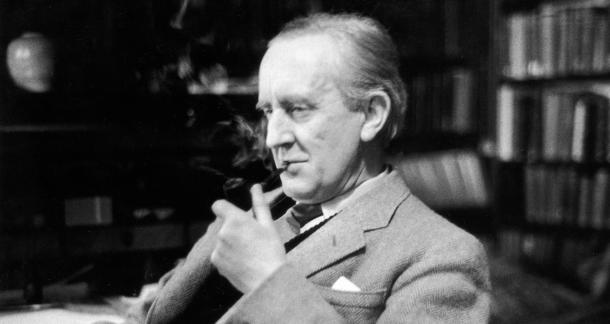
This spring, the Lukeion Project will be offering an entire semester on the literature of J.R.R. Tolkien. There's still time to register. Many of our students enjoy Tolkien as their fun, leisure reading, and some may wonder
whether his work deserves time spent in academic study. Will prospective colleges take that high school english credit seriously? Over 30 prominent colleges and university in the United States, including Rice, Rutgers, Purdue, Villanova, the University of Chicago, Harvard, and the University of North Carolina at Chapel Hill all think it deserves enough study to either give Tolkien’s writings a complete course of their own or have made them a prominent part of classes on either epic literature or medieval literature. Many others have had seminars or workshops on his writing, and many of those are at the graduate level. The University of Texas at Austin and Cal State, Northridge have given class time and study to this prominent author. Oxford University, Tolkien’s long time scholarly home, offers all types of classes on the writing of Tolkien.

When literature teachers talk about why we study literature, we mention ideas such as “universal truths,” “studying the human condition,” beauty of the language,” and “enduring effects on the reader.”  We can talk about themes, aesthetic qualities, symbolism, and characterization. We discuss how literature can put us in the shoes of people we will never meet, take us to places we can never go, and gives us both sympathy and empathy for others. The list of what great literature brings us is almost endless, and all of these can be found and studied in Tolkien’s writings without doubt. But they can be found in other authors also, so why does Tolkien merit this type of study? Here are my ideas on that subject.

J.R.R. Tolkien was not just a author of extraordinary fiction, but a preeminent literary scholar and critic. His essay “The Monsters and the Critics” changed the direction of studies and criticism on Beowulf for scholars ever since its publication. Seamus Haney, the former Poet Laureate of Ireland, praised his scholarship on Beowulf and other scholars have called his work “the most important article ever written about the poem.” His study of Beowulf strongly influenced The Hobbit as well as his other writings. Beowulf is a standard text for any college literature class because it is the first epic we have in English, and Tolkien’s study and scholarship on the poem are worth studying.

Tolkien’s own areas of study included Philology (Greek and Latin), Old English, Middle English, Norse Mythology, Medieval Literature, Anglo-Saxon Culture and Literature, and several others. Philology was his main interest and his strong scholarship in this area permeates all the writings he published. In studying Tolkien, we are given access to one of the finest minds in the development of languages that has ever published. 

In the course of his studies, Tolkien, along with E.V. Gordon, translated Sir Gawain and the Green Knight from Middle English. His translation is the most well-known and used translation of that Medieval Classic. He also began The Fall of Arthur, a Arthurian legend written in alliterative form, using Old English meter and based on Medieval legends. 

In studying the work of Tolkien, students are exposed to elements of all the interests Tolkien studies throughout his long and distinguished academic career. This includes the history of the Ango-Saxon culture as many of his creations, such as the Riders of Rohan, are based on Anglo-Saxon history and society, and the mythologies of many different countries, not just the Norse mythology that he was known to have loved. Germanic myths and legends also figure prominently. 

While many fan publications exist over the writings of Tolkien, a scholarly, peer-reviewed journal is also published. Tolkien Studies, published by the University of West Virginia Press has been publication since 2004. 

Students spending a semester with Tolkien will have the opportunity to analyze poetry, do close readings on narrative passages, delve into independent research on such topics as portrayals of Anglo-Saxon culture in Tolkien’s writings, and write character analyses. They may write word studies, comparative literature papers, or philosophical essays. The possibilities are endless, and the work can be rigorous while still being appealing for students.

If you are looking for an English or literature class that is highly academic while fun and engaging, think about a semester of Tolkien studies. 

“It’s a dangerous business, Frodo, going out your door. You step onto the road, and if you
don’t keep your feet, there’s no knowing where you might be swept off to.”

Deadlines First Hurt Then Help

By Amy Barr with The Lukeion Project , in charge of lots of things and especially Latin 1-7 The start of a new academic year at last! We...